
3 September 2026
How to Use a Portable Ice Maker for Camping and Road Trips
By OpenClip
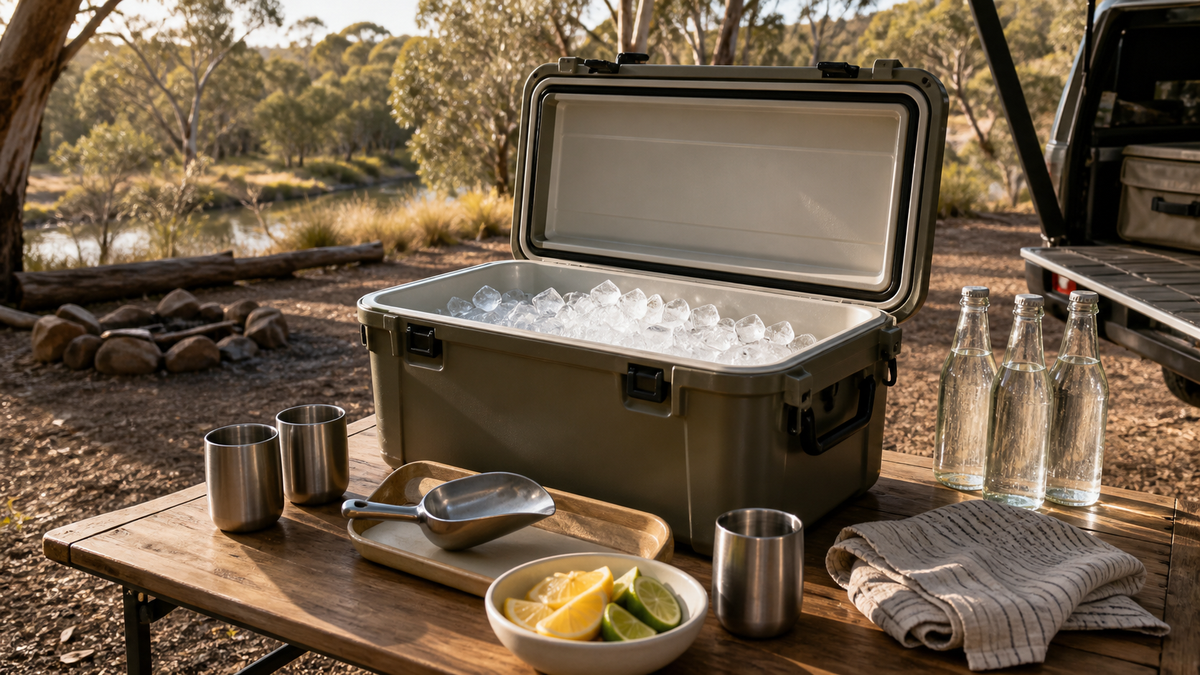
A portable ice maker can suit camping and road trips when you need small batches of drink ice and have a stable, ventilated setup with suitable power and drinking-quality water. Plan it as an ice-making appliance, not a freezer: allow time for each batch, use cubes promptly, and keep a separate esky or fridge for food that must stay cold.
Start with the job you want the ice to do
Before packing an appliance, decide whether you want ice for a few drinks or enough cooling for a group. A compact personal ice maker is best treated as a steady source of small batches. It is not a substitute for the ice bricks, refrigerator or properly packed esky that keeps perishable food cold during travel.
The IceOne™ Portable Ice Maker moulds 10 square cubes per cycle. The listed cycle is approximately 15 minutes for hollow ice or 20 minutes for solid ice, with timing affected by starting water temperature and ambient conditions. That makes it practical for topping up a couple of drinks, but not for instantly filling a large party esky.
Build a realistic ice plan
Work backwards from when you expect to serve drinks. If you arrive at camp in the afternoon, set up the unit before unpacking non-essential gear, then let batches run while you organise the site. Use the first cubes straight away or transfer them to a freezer if one is available. The machine makes ice; it does not store it frozen.
A simple plan is to:
- Bring pre-frozen ice bricks for the food esky.
- Reserve portable-machine ice for drinks and small on-demand needs.
- Allow at least one full cycle before the first serve.
- Make another batch only when you know it will be used.
This division of labour matters. Food Standards Australia New Zealand advises keeping potentially hazardous food cold during transport; a portable ice maker should not be relied on as the only cold-storage method. For more detail, read our camping food storage guide.
Check your power setup before leaving
IceOne is rated at 12V DC and 90W. At 9.9 × 9.9 × 18.9 cm, it has a small footprint, but it still needs a firm, level surface and clear ventilation. Never balance it on a vehicle seat, soft bedding or an uneven camp table.
For home or powered-site use, follow the supplied product instructions and use the appropriate approved power setup. For compatible vehicle outlets, the IceOne™ 12V Vehicle Power Cable is sold separately. Check the outlet and power arrangement before the trip; do not assume every 12V socket or adaptor is suitable. Keep the unit, plugs and connections dry, and never operate it while driving.
Use drinking-quality water and clean handling
Ice is food. Use drinking-quality water, clean hands and clean utensils whenever you fill the machine or serve cubes. Food Standards Australia New Zealand states that ice must be made with potable water. If local water is subject to an advisory or you are unsure about a private tank or remote supply, follow local health advice and use safe bottled or correctly treated water.
Pack a dedicated ice scoop rather than reaching into finished ice with hands or drinking cups. Store the scoop on a clean tray between uses. Keep the water reservoir and ice-contact surfaces away from dust, fuel, insect spray and raw-food preparation. Follow the product cleaning instructions before the first use and after the trip, and allow parts to dry before storage.
Make the campsite workflow easy
Choose the right position
Set up under shade on a stable table, with airflow around the unit. Avoid direct sun, rain, loose sand and the hot interior of a parked vehicle. Warmer starting water and hot surroundings can affect cycle time, so use cool drinking water where practical without overfilling the reservoir.
Keep drink ice separate from food cooling
If cubes are intended for drinks, keep them in a clean, food-safe container and use a scoop. Do not transfer drink ice into an esky where packaging, raw meat juices or unwashed produce could contaminate it. Likewise, never take melted esky water and put it back into the machine.
Pack for the return journey
Before leaving, disconnect power, empty remaining water as directed, wipe the exterior and let the unit drain and dry. Transport it upright and protected from knocks. A small clean towel, scoop and lidded water bottle make the pack-down routine easier.
When a portable ice maker is—and is not—the right fit
IceOne is most useful for one or two people, compact camps, caravans, desks and small kitchens where batches of 10 cubes match the routine. It may also suit a road-trip stop where you have time, suitable power and a safe surface.
Choose bagged ice, a larger machine or pre-frozen supplies when you need to serve a crowd, rapidly chill a full esky, or make a large quantity at once. For a weekend away, the best setup may combine pre-frozen ice bricks for food with small fresh batches for drinks. That is more realistic than asking one compact appliance to do both jobs.
Portable ice maker camping checklist
- IceOne unit and the correct power connection
- Optional compatible 12V vehicle cable if required
- Drinking-quality water in a clean, closed container
- Stable, level table with shade and ventilation
- Clean scoop, tray and lidded container for finished ice
- Separate ice bricks or refrigeration for perishable food
- Cleaning cloth and time for draining and drying
If your trip also includes coffee stops, pair this plan with our portable coffee road-trip packing guide.
Frequently asked questions
How long does IceOne take to make ice?
The current product specification lists about 15 minutes for hollow ice and 20 minutes for solid ice. Starting water temperature, ventilation and surrounding conditions can affect the cycle time.
How much ice does IceOne make per cycle?
IceOne uses a mould for 10 square cubes. It is designed for personal or small-batch use rather than filling a large esky or supplying a party.
Can a portable ice maker keep food cold?
It can make ice, but it is not a refrigerator or freezer. Use appropriate refrigeration, ice bricks or a correctly packed esky to keep perishable food cold during transport and storage.
What water should I use to make ice while camping?
Use drinking-quality water. Follow local health advice if a supply is subject to an advisory or if you are unsure about tank, bore or remote-source water.
Can I run IceOne from a vehicle?
A compatible 12V vehicle power cable is available separately. Confirm that the vehicle outlet and power arrangement meet the product requirements, keep connections dry, and operate the unit only while parked on a stable, ventilated surface.
Make small-batch ice part of the plan
For trips where 10 cubes at a time are enough, shop IceOne™ Portable Ice Maker and check the optional 12V vehicle cable before you leave. Pack safe water, suitable cold storage and a clean serving routine alongside it.