
23 August 2026
How to Cool, Store and Reheat Leftovers Safely
By OpenClip
A practical guide to cooling leftovers promptly, choosing sensible portions, storing them in the fridge or freezer, and reheating only what you need.
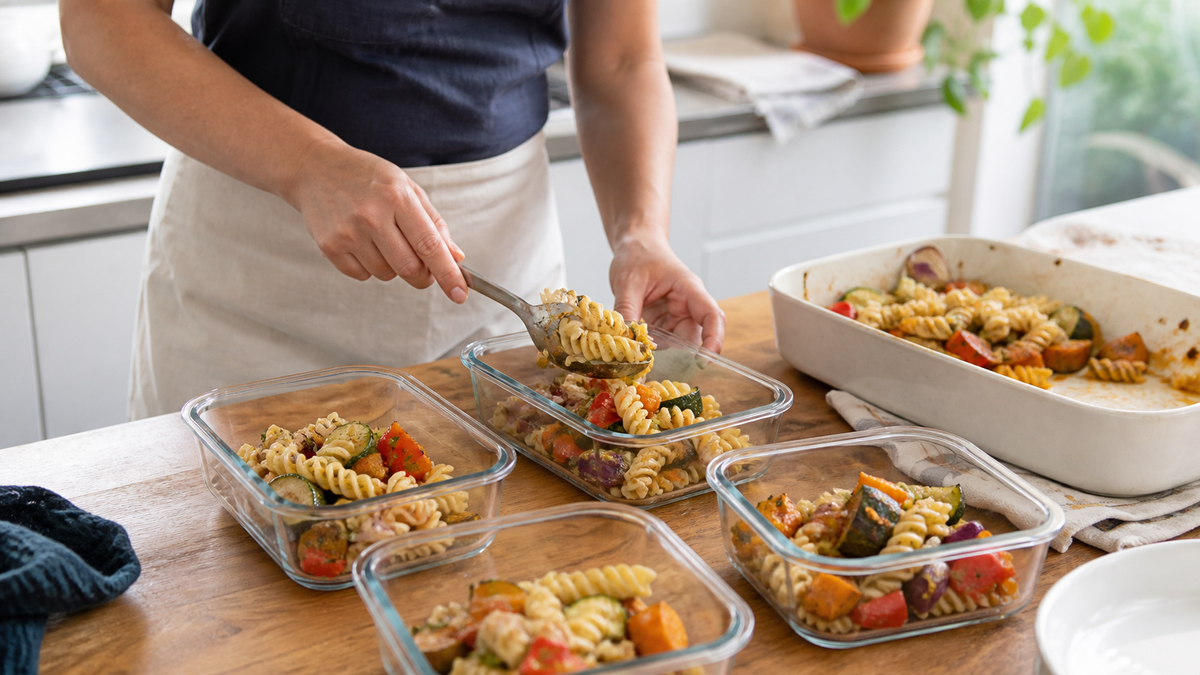
Safe leftover storage starts before the food reaches the fridge. Cool cooked food promptly, divide large amounts into shallow portions, use clean food-safe containers or bags, label each portion, and keep it properly chilled or frozen. When it is time to eat, reheat only what you need and make sure the food is steaming hot throughout. If its storage history is uncertain, discard it.
Why leftover handling matters
Leftovers can turn one cooking session into several useful meals, but cooked food still needs careful handling. Bacteria may grow when perishable food spends too long in the temperature range between refrigeration and hot holding. Smell and appearance cannot reliably tell you whether harmful bacteria are present, so a consistent storage routine is more useful than a last-minute sniff test.
Australian food-safety authorities use time and temperature guidance for potentially hazardous food. The details can vary with the food and situation, so consult current advice from Food Standards Australia New Zealand and your state or territory authority when you need a specific limit. This guide focuses on practical habits rather than replacing official instructions.
Start with clean hands and equipment
Wash and dry your hands before packing leftovers. Use clean utensils, containers and work surfaces, and keep cooked food away from raw meat, poultry, seafood and their juices. Cross-contamination can undo otherwise careful cooling and storage.
Check reusable containers and bags before use. They should be clean, dry, intact and suitable for the intended temperature. Retire anything with a split, puncture, damaged closure or surface that can no longer be cleaned properly.
Cool large meals in smaller portions
A deep pot of soup, curry or pasta sauce can hold heat in its centre for a long time. Dividing food into smaller, shallow portions increases the surface area and helps heat escape more efficiently. It also creates meal-sized packs that are easier to chill, freeze and reheat.
- Transfer food from a large cooking vessel into clean, shallow containers.
- Separate a family-sized batch into the portions you are likely to serve.
- Keep lids loose while hot food is actively cooling only if this can be done hygienically, then close them securely for storage.
- Do not leave food on the bench for an extended period while waiting for it to become completely cold.
- Avoid placing one very large, steaming pot into the refrigerator, where it may cool slowly and warm nearby items.
For exact cooling times and methods in your circumstances, follow current Australian food-safety guidance. Extra care is sensible when serving pregnant people, young children, older adults or anyone with a weakened immune system.
Choose the fridge or freezer
Use the refrigerator for food you genuinely plan to eat soon. Freeze suitable portions when plans are less certain or when you have cooked more than the household will use promptly. Freezing slows microbial growth but does not make unsafe food safe, so only freeze food that has been handled correctly up to that point.
Set the fridge to 5°C or colder and the freezer to about −18°C, consistent with common Australian food-safety guidance and your appliance instructions. A separate appliance thermometer can help you check actual temperatures, especially in an older fridge or during hot weather.
Pack leftovers to suit the next meal
Match the portion to how you will use it. A lunch-sized serve of curry, a two-person portion of soup or a small amount of cooked grain is easier to manage than one oversized package. Smaller portions also mean you do not need to expose the entire batch each time you want a meal.
Rigid containers are useful for liquids and foods that may be crushed. Leave appropriate room for expansion when freezing soups or sauces. Freezer-suitable bags can work well for flatter portions, provided their closures stay clean and secure.
Compatible reusable vacuum bags can reduce excess air around suitable foods, but vacuum storage does not replace safe cooling, refrigeration or freezing. Keep liquids away from the valve, ensure the closure is fully sealed, and follow the bag and appliance instructions. Do not vacuum-seal food while it is still hot.
Label food before storing it
Write the name of the dish and the date it was packed. If helpful, add the number of serves or a note about allergens. Labels make it easier to rotate food, identify mystery freezer packs and avoid repeatedly opening containers.
Place newer food behind older food so the oldest suitable portion is used first. A short weekly check of the fridge can catch leftovers before they are forgotten. Do not rely on one universal storage period: safe timeframes depend on the food, handling, temperature and official guidance.
Thaw frozen leftovers safely
The refrigerator is a controlled place to thaw most frozen leftovers. Plan ahead and place the package on a plate or in a container to catch any leaks. A microwave can also be used when the food will be cooked or reheated immediately afterwards.
Avoid thawing perishable leftovers on the kitchen bench. The outside may warm into an unsafe temperature range while the centre remains frozen. Follow the microwave and food instructions, especially for dense meals that may heat unevenly.
Reheat only the amount you need
Remove a single portion instead of repeatedly warming and cooling the full batch. Reheat leftovers until they are steaming hot throughout, stirring or rotating where needed to eliminate cold spots. Sauces, soups and stews should be heated evenly rather than merely warmed at the edges.
Microwave power and portion shape affect heating, so allow standing time when the appliance instructions call for it. Check the centre and thickest parts before serving. If you use a thermometer, clean it before and after checking food.
Know when to discard leftovers
Discard food if it has visible mould, an unusual odour after opening, leaking or damaged packaging, or an uncertain time and temperature history. Also discard it if the fridge or freezer failed and you cannot verify that the food remained within safe limits.
Do not taste food to test whether it is safe. When in doubt, use current official advice or throw it away. This is particularly important for high-risk foods and vulnerable people.
A simple leftover routine
- Decide which food will be kept as soon as the meal ends.
- Use clean utensils to divide it into shallow meal-sized portions.
- Cool it promptly according to food-safety guidance.
- Seal it in clean, suitable storage.
- Label the dish and packing date.
- Refrigerate food for near-term use and freeze suitable extras.
- Thaw safely and reheat only the portion required.
- Discard food when its condition or storage history is uncertain.
The practical takeaway
Good leftover storage is a chain of small decisions: clean handling, prompt cooling, sensible portions, reliable cold storage and thorough reheating. Packaging can protect food quality and make the routine easier, but it cannot correct unsafe handling. Build the routine into clearing the table, and tomorrow’s meal will be simpler to identify, store and serve with confidence.