
15 August 2026
How to Organise Your Fridge to Reduce Food Waste
By OpenClip
A practical fridge-organisation system that makes perishable food easier to see, keeps raw and ready-to-eat foods separate, and helps households use what they already have.
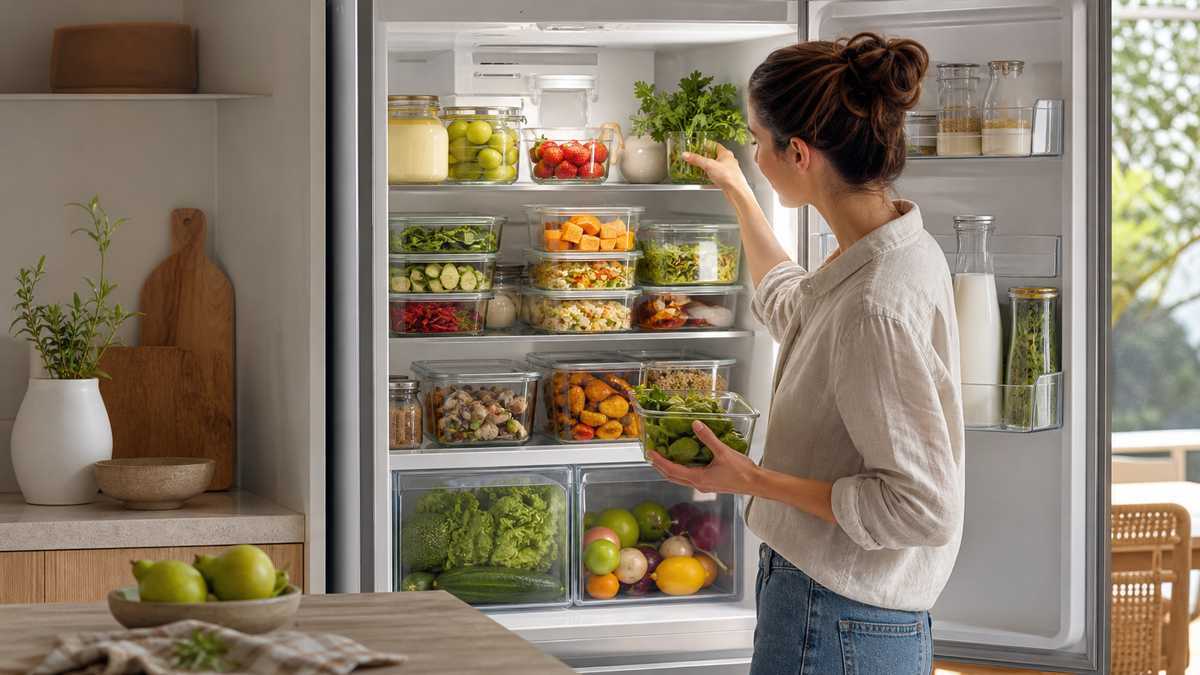
An organised fridge can help reduce food waste by making perishable ingredients visible, grouping food by purpose and creating a clear place for items that should be used soon. The most useful system is simple: keep food safely chilled, separate raw and ready-to-eat items, label opened or prepared food, and check the fridge before shopping.
What is the best way to organise a fridge?
The best fridge layout balances food safety with visibility. Store ready-to-eat foods above raw meat and seafood, keep raw products securely contained on a low shelf, use drawers for appropriate produce, and create an eye-level “use first” area for food that needs attention.
Your refrigerator may have manufacturer-specific zones, vents or temperature guidance, so start with its manual. Aim to keep chilled food at 5°C or below and use a fridge thermometer if the appliance does not show a reliable temperature. Avoid packing shelves so tightly that cold air cannot circulate.
Start with a complete fridge reset
Remove food one shelf at a time so chilled items are not left out longer than necessary. Check use-by dates, inspect open containers and discard anything that cannot be identified or confirmed as safe. A best-before date relates mainly to quality, while a use-by date relates to safety; follow the label and current Australian food-safety guidance.
Clean spills with an appropriate food-safe method, then dry shelves and drawers before returning food. Spills from raw meat or seafood need particular care because they can contaminate nearby items.
As you reload, group similar foods together rather than placing items wherever they fit. A consistent home for yoghurt, cheese, sauces, leftovers and produce makes it easier to notice when something is missing or duplicated.
Use the upper shelves for ready-to-eat foods
Upper and middle shelves are generally practical for foods that are ready to eat or require no further cooking. Depending on your appliance, this may include leftovers, prepared lunches, dairy foods and opened ingredients.
Use clear containers or labels so the contents and packing date are obvious. Stack only when labels remain visible. An opaque container at the back of a crowded shelf is easy to forget, even if it was packed with good intentions.
Place the food you expect to use next near the front. Newer items can sit behind older ones when they are the same type, creating a simple first-in, first-out routine.
Keep raw meat and seafood low and contained
Raw meat, poultry and seafood should be kept separate from ready-to-eat foods. Store them on a low shelf in secure, leak-proof packaging or inside a clean secondary tray so juices cannot drip onto other ingredients.
Do not rely on a vacuum seal as the only protection against cross-contamination. The outside of a package can still become contaminated during handling. Wash hands after touching raw-food packaging and clean any surface or utensil it contacts.
If you portion raw proteins for later, refrigerate or freeze them promptly and label each portion. Follow product instructions and safe storage guidance rather than estimating safety from appearance or smell.
Create an eye-level “use first” zone
A use-first zone is a small, clearly marked space for ingredients that should be prioritised. It might hold an open tub of yoghurt, half a capsicum, cooked rice intended for tomorrow or fruit that is ready to eat.
Keep this area limited. If it becomes another crowded shelf, it stops working. Review it when planning dinner, before ordering takeaway and before writing a shopping list.
Do not use the area to extend the life of food beyond safe limits. If a use-by date has passed, or storage conditions are uncertain, moving an item to the front does not make it safe.
Organise produce by how it stores best
Fruit and vegetables do not all respond to storage in the same way. Use produce drawers and humidity controls according to the appliance instructions, and check the storage guidance for individual ingredients.
Remove visibly damaged produce that could affect nearby items. Keep prepared produce clean, dry and appropriately contained. Delicate leafy vegetables may need protection from crushing, while sturdy vegetables can often be grouped into portions for planned meals.
Some produce is best stored outside the refrigerator until ripe, while other items should be chilled promptly. Avoid applying one rule to everything. Labels, retailer guidance and trusted Australian food-safety sources are more reliable than social-media storage tricks.
Should you store food in reusable vacuum bags?
Reusable vacuum bags can help organise suitable foods into visible portions and reduce bulky air around compatible ingredients. They can be useful for some firm produce, cheese, meal components and freezer-ready portions when used according to the bag and food instructions.
Vacuum sealing does not make perishable food shelf-stable and does not replace refrigeration or freezing. Cool cooked food safely before packing, keep closures and valves clean, avoid overfilling and label the contents and date.
Choose a bag size close to the portion you normally use. Browse reusable vacuum bag sizes if you need to match small ingredients, family portions or bulk-prep quantities. Retire any bag that is damaged, difficult to clean or unable to maintain a seal.
Use fridge-door storage carefully
The refrigerator door experiences more temperature change than internal shelves because it is opened frequently. Use it for items suited to that location according to the appliance and product instructions.
Avoid treating every door compartment as interchangeable. If a highly perishable item requires consistently cold storage, place it in an appropriate internal zone rather than choosing a convenient door shelf.
Group condiments by type and check them periodically. Open bottles can accumulate even when only a small amount remains, taking up space and hiding items behind them.
Label leftovers with useful information
Every leftover should answer three questions: what is it, when was it prepared, and what is the plan for it? A label such as “vegetable curry — Tuesday lunch — 14 Aug” is more useful than “curry”.
Cool and refrigerate leftovers promptly using safe methods. Divide large quantities into suitable shallow portions where appropriate, and avoid repeatedly warming and cooling the same food. When reheating, follow safe guidance for the food and heat it thoroughly.
If nobody knows when an item was prepared or how long it remained unrefrigerated, discard it. Smell and appearance cannot reliably establish food safety.
Build fridge checks into your weekly routine
A fridge system works only when it is reviewed. Use three quick checks instead of waiting for a major clean-out.
Before shopping
- Review the use-first zone.
- Check produce drawers and leftovers.
- Plan meals around food already available.
- Add only genuine gaps to the shopping list.
After shopping
- Put chilled and frozen food away promptly.
- Move older matching items towards the front.
- Keep raw food separate and contained.
- Avoid overcrowding shelves.
Before bin night
- Check open containers and labels.
- Freeze suitable food you will not use in time.
- Note repeated waste so future quantities can be adjusted.
Common fridge-organisation mistakes
- Overfilling shelves: crowded food is harder to see and may restrict airflow.
- Hiding leftovers in opaque containers: use clear storage or prominent labels.
- Storing raw food above ready-to-eat food: keep raw products low and leak-proof.
- Trusting a seal instead of temperature control: perishable food must remain appropriately chilled or frozen.
- Shopping without checking: duplicate purchases often bury older ingredients.
- Using smell as the safety test: follow dates, storage conditions and recognised guidance.
Make the next meal easier to see
The goal of fridge organisation is not a perfect photograph. It is a safer, repeatable system that helps your household see what is available and decide what to cook next. Start with one use-first space, clear labels and a pre-shopping check. Those habits are easier to maintain than a complicated arrangement of matching containers.
Food-safety note: This article provides general organisation guidance. Follow your refrigerator manual, product labels, use-by dates and current Australian food-safety advice. If safe temperature or handling cannot be confirmed, do not consume the food.