
25 August 2026
How to Store Fresh Herbs So They Are Easier to Use
By OpenClip
Fresh herbs last best when excess moisture, crushing and temperature are managed. Learn practical fridge and freezer methods for leafy herbs, woody herbs and everyday cooking portions.
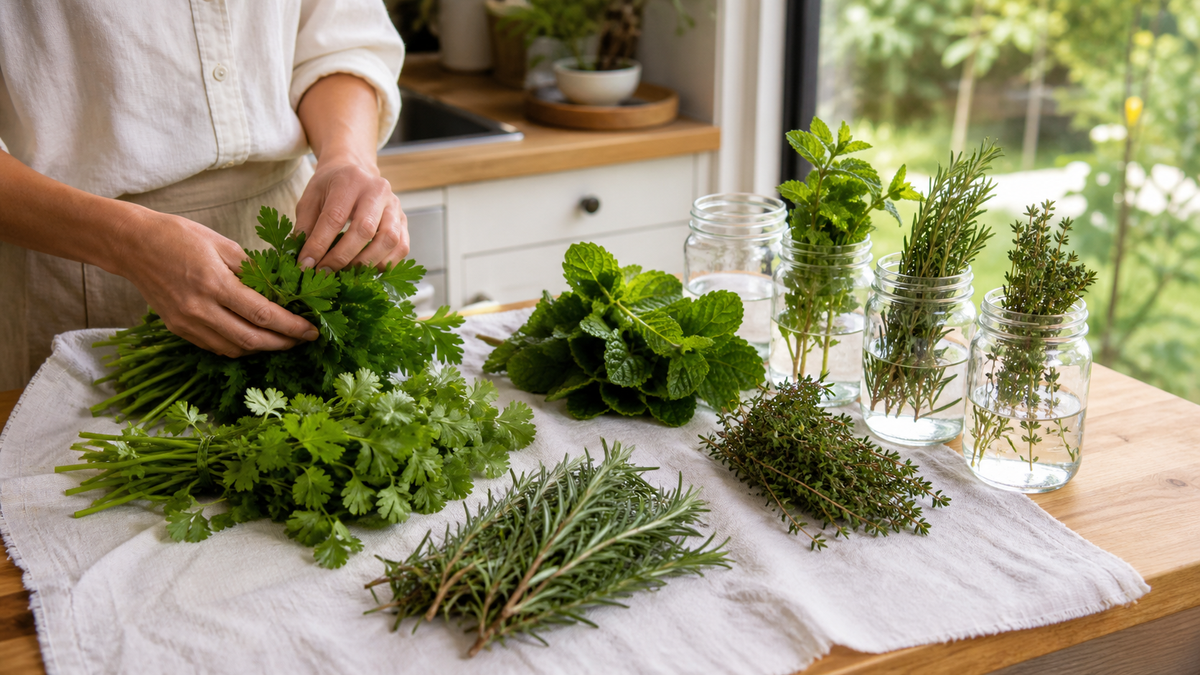
Fresh herbs are easiest to use when they are stored according to their texture. Keep leafy bunches lightly protected from drying, keep woody herbs dry and loosely wrapped, and refrigerate most cut herbs promptly. Remove damaged leaves, avoid crushing, and check the bunch regularly. If you will not use the herbs soon, freeze suitable varieties in cooking-sized portions rather than waiting for them to wilt.
Why fresh herbs need different storage methods
Herbs are not all built the same. Soft leafy herbs such as parsley, coriander, mint and dill lose water readily and bruise easily. Woody herbs such as rosemary, thyme and sage have firmer leaves and generally tolerate a drier wrapping method. Basil is particularly sensitive to cold and often behaves differently from other cut herbs.
The storage goal is balance. Too little moisture can leave leaves limp; too much trapped water can encourage sliminess and decay. Temperature, handling before purchase and the condition of the bunch also affect how well it keeps, so no method guarantees a fixed number of days.
Inspect the bunch before storing it
Unfasten tight bands or ties that may crush the stems. Remove wilted, yellow, blackened or slimy pieces so they do not remain pressed against healthy leaves. Check the centre of dense bunches, where damaged leaves can be easy to miss.
If the herbs are visibly dirty, rinse them in clean cool water and dry them thoroughly before storage. A salad spinner followed by gentle air-drying on a clean towel can help remove surface water. If they are already clean and dry, consider washing only the amount needed just before use. Persistent dampness in storage is usually more troublesome than a little soil that can be washed off later.
Store soft leafy herbs with controlled moisture
Parsley, coriander, dill and mint benefit from protection against both drying and crushing. One practical method is to wrap the dry bunch loosely in a clean, barely damp paper or reusable cloth, then place it in a food-safe container or bag without compressing the leaves.
Another option for sturdy stems is to trim the base and stand the bunch in a small amount of clean water, like flowers. Keep leaves above the waterline, cover them loosely if needed, and refrigerate. Change the water if it becomes cloudy and inspect the stems each time.
Whichever method you choose, avoid tightly packing wet leaves. Give the bunch enough room that you can remove a few sprigs without bruising the rest.
Keep woody herbs dry and protected
Rosemary, thyme, oregano and sage are usually easier to manage when kept dry. Lay the sprigs on a clean, dry paper or cloth, wrap them loosely and place them in a container or bag in the refrigerator.
Do not strip every leaf from the stems before storage unless you are preparing a recipe. Whole sprigs are often easier to handle and less exposed. Check for condensation; if the wrapping becomes wet, replace it with clean dry material.
Treat basil differently
Cut basil can blacken in a cold refrigerator. For a fresh bunch with intact stems, trim the ends and stand it in a small glass of water at room temperature, away from direct sun and heat. Keep leaves out of the water and replace the water when needed.
Room-temperature storage is only appropriate while the basil remains fresh and the environment is suitable. If the bunch becomes slimy, mouldy or unusually odorous, discard it. Packaged basil may have specific refrigeration instructions, which should take priority.
Choose the right refrigerator position
Most herbs should be refrigerated at 5°C or colder, consistent with common Australian food-safety guidance. The back of some fridges can be cold enough to freeze delicate leaves, while the door experiences frequent temperature changes. A crisper drawer or stable middle shelf may provide a more suitable environment, depending on the appliance.
Keep herbs away from raw meat, poultry and seafood and contain them so drips cannot reach the leaves. Do not block vents or pack the crisper so tightly that air cannot circulate.
Can fresh herbs be vacuum stored?
Vacuum storage can reduce air around suitable foods, but delicate herbs may be compressed or bruised if too much air is removed. Moist leaves can also create an unreliable storage environment. For whole fresh bunches, a rigid container or loose protective method is often simpler.
Compatible reusable vacuum bags may be more useful for dry, pre-frozen herb portions than for fragile fresh leaves. Keep the closure and valve clean, follow the bag and appliance instructions, and stop using damaged bags. Vacuum storage does not replace refrigeration, freezing, cleanliness or inspection.
Freeze herbs for cooking
Freezing changes the texture of most herbs, so frozen herbs are better suited to cooked dishes, sauces, soups and dressings than to a fresh garnish. Start with clean, thoroughly dried herbs and remove damaged pieces.
- Loose leaves: spread dry leaves or chopped herbs in a single layer to pre-freeze, then transfer them to suitable freezer storage.
- Herb cubes: place chopped herbs in an ice-cube tray with a small amount of water or cooking oil, if appropriate for the intended recipe, then freeze.
- Whole sprigs: freeze sturdy rosemary or thyme sprigs flat before packing them together.
Leave expansion space for liquids, label each portion and use food-safe freezer materials. Oil-based herb mixtures should remain frozen and be added directly to cooking rather than stored at room temperature. Homemade herb-in-oil mixtures can present food-safety risks if handled incorrectly, so follow current authoritative guidance.
Label portions for the way you cook
Write the herb name, preparation and freezing date on each pack. Similar-looking chopped herbs are difficult to identify once frozen. Portion them in amounts that match common recipes, such as one spoonful for soup or enough sprigs for a tray of roasted vegetables.
Rotate older portions forward and use them for flavour rather than decoration. Freezer storage protects convenience, but quality still changes over time and varies by herb and packaging.
Know when herbs should be discarded
Discard herbs with visible mould, extensive slime, an unpleasant odour or contamination from raw food. A few wilted leaves may be a quality issue, but remove them promptly and inspect the rest of the bunch carefully.
Do not taste herbs to decide whether mouldy or contaminated leaves are safe. When storage time or temperature is uncertain, use current Australian food-safety guidance and take extra care when preparing food for vulnerable people.
A simple fresh-herb routine
- Buy a quantity that fits the week’s meals.
- Remove tight ties and damaged leaves.
- Wash only when needed, then dry thoroughly.
- Use controlled moisture for soft herbs and dry wrapping for woody herbs.
- Store most bunches in a stable refrigerator area.
- Inspect them whenever you take a portion.
- Freeze suitable extras before they deteriorate.
- Label frozen portions by herb and date.
The practical takeaway
Fresh-herb storage works best when it follows the plant rather than one universal rule. Protect leafy herbs from drying without trapping water, keep woody sprigs dry, treat basil gently, and freeze clean extras in recipe-sized portions. A quick inspection each time you cook helps you use the best leaves first and remove damaged ones before they affect the rest.