
20 August 2026
How to Pack a Work Lunch That Reheats Well
By OpenClip
A practical guide to choosing, cooling, packing, transporting and reheating work lunches without sacrificing texture or food safety.
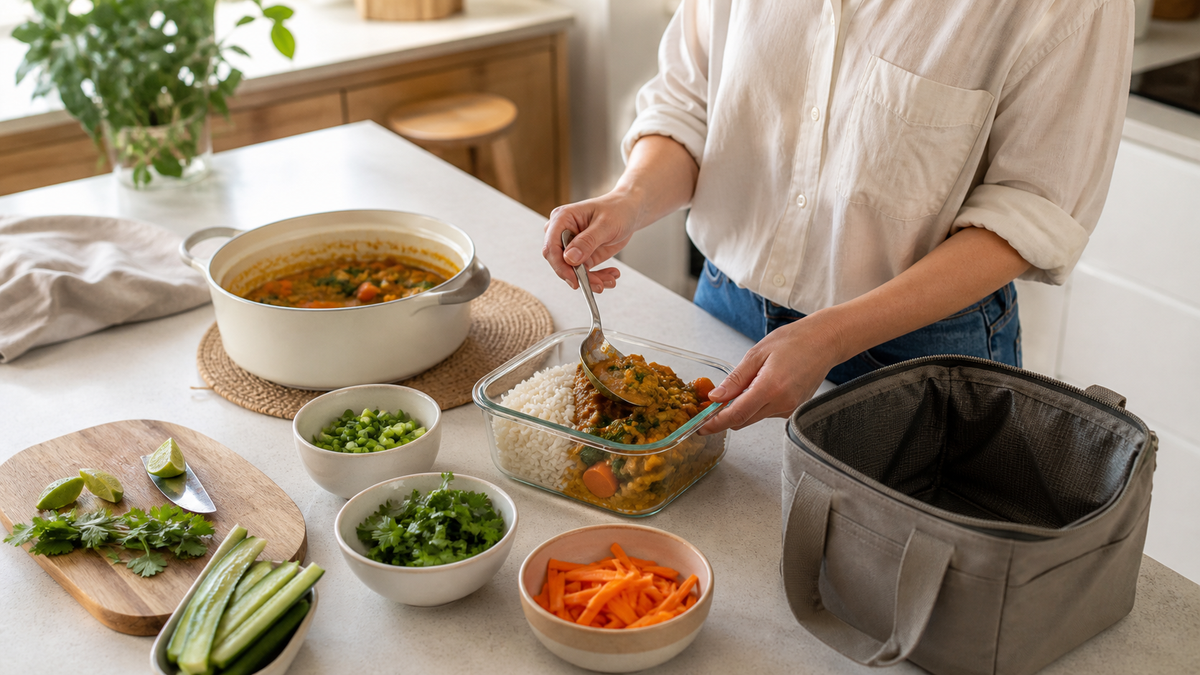
A work lunch reheats best when it is cooked with moisture in mind, cooled safely, packed in a suitable portion and kept cold until heating time. Choose meals with sauces, grains or braised ingredients, separate crisp garnishes, and follow safe temperature and handling guidance throughout preparation, transport and reheating.
What meals reheat well for work?
Meals with even-sized ingredients and some moisture generally reheat more predictably than delicate, dry or highly crisp foods. Curries, stews, pasta sauces, rice bowls, casseroles, soups and braised dishes are practical starting points.
You do not need a different recipe for every workday. A cooked base can support several lunches when the flavours and finishing ingredients change. Roast vegetables and grains might become a warm bowl one day and a side for a braised protein the next.
Choose food that suits your available heating equipment and lunch break. A thick frozen block may need much longer than a shallow chilled portion, while a very full container can heat unevenly.
Build lunch around four simple parts
A balanced packing system makes variety easier without requiring a complicated meal plan. Think in components:
- A base: rice, pasta, couscous, noodles, potato or another grain or starch.
- A main component: cooked vegetables, beans, lentils, meat, poultry, fish or tofu prepared and stored safely.
- Moisture: sauce, stock, dressing or naturally moist ingredients that suit reheating.
- A fresh finish: herbs, leafy greens, yoghurt, nuts or crunchy toppings packed separately where appropriate.
This structure lets you keep ingredients with different storage or heating needs apart. Add cold or crisp elements only after the hot portion has been reheated.
Cook for texture after reheating
Stop vegetables before they become overly soft during the first cook because they will continue to change when reheated. Cut ingredients into consistent pieces so they warm at a similar rate.
Include enough sauce for pasta, grains and lean proteins, which can dry during storage and reheating. Pack extra sauce separately if you are unsure how much the meal will need. Foods designed to be crisp—such as fried coatings, toasted bread or delicate pastry—usually lose their texture in a closed container, so save them for meals you can assemble at work.
For rice and other grains, follow safe cooking, cooling and refrigeration guidance. Do not leave cooked food sitting at room temperature while you finish unrelated kitchen tasks.
How should cooked lunch be cooled?
Cool cooked food safely and refrigerate it promptly. Large, deep quantities retain heat longer, so divide suitable food into smaller or shallow portions where recommended rather than placing one large hot pot straight into storage.
Use clean containers and protect food from contamination while it cools. Follow current Australian food-safety guidance and your refrigerator instructions. Do not seal hot food in a vacuum bag: steam and condensation can collect inside, and vacuum storage does not replace safe cooling.
Once food is properly chilled, label the portion with the meal name and preparation date. If you will not use it within a safe refrigerated period, freeze it promptly when the food is suitable for freezing.
Pack the right portion for your workday
Pack an amount that can heat evenly in the equipment you will use. A portion that is too large may be hot around the edges while remaining cool in the centre.
Keep sauces, dressings and fresh toppings separate if they have different temperature requirements. Use leak-resistant containers for liquids and leave appropriate headspace where the container instructions require it.
If reusable vacuum bags suit part of your preparation, use them for compatible ingredients and follow the bag instructions. They can help portion some meal components before they reach the lunch container, but they do not make chilled food safe without refrigeration.
Keep lunch cold during the commute
Perishable lunches need appropriate temperature control from home until reheating. Use a workplace refrigerator as soon as you arrive, or an insulated lunch carrier with sufficient frozen blocks when reliable refrigeration is unavailable.
Keep the carrier closed, shaded and away from hot vehicles or direct sunlight. The inside of a parked car can become unsuitable for perishable food even when the weather does not feel extreme.
If your commute or work conditions make safe chilling uncertain, choose shelf-stable foods or another lunch plan. Do not rely on smell or appearance to decide whether food has remained safe.
How do you reheat lunch evenly?
Follow the instructions for your heating equipment and food container. Stir food when safe and practical, especially for thick dishes, then check the centre as well as the edges. Reheat the portion thoroughly and eat it promptly.
Avoid repeatedly heating, cooling and reheating the same meal. Pack one lunch-sized portion so only the food you intend to eat is heated.
If you work away from a kitchen, a cordless heated container can provide another option. The HeatOne cordless heated lunch box has selectable temperature and heating-time settings; actual results vary with the food, portion, starting temperature and ambient conditions. Always follow its product instructions and continue to transport perishable food safely.
Five work lunches designed for reheating
1. Tomato and lentil pasta
Pack pasta with plenty of sauce and keep parmesan or fresh herbs separate. Slightly undercooking the pasta during preparation can help preserve texture.
2. Vegetable curry with rice
Use evenly cut vegetables and pack a moist curry beside or over rice. Cool cooked rice promptly and follow safe storage guidance.
3. Braised chicken and vegetables
A sauce or cooking liquid helps protect lean meat during reheating. Keep salad or crunchy garnishes in a separate chilled container.
4. Bean and vegetable chilli
Chilli is easy to portion and stir during heating. Add avocado, yoghurt or herbs only after the hot portion is ready.
5. Soup with bread
Use a secure container suitable for liquids. Pack bread separately so it remains dry, and check that the soup is heated evenly through the centre.
A practical Sunday-to-workday routine
- Choose two meals with overlapping ingredients.
- Cook, portion and cool them using safe methods.
- Label refrigerated portions and freeze later-week portions when appropriate.
- Move a frozen lunch to the refrigerator in time to thaw safely.
- Add cold toppings and frozen blocks immediately before leaving home.
- Refrigerate the meal on arrival or keep it in reliable cold storage.
- Heat one portion thoroughly and eat it promptly.
Common work-lunch mistakes
- Packing hot food immediately: cool it safely before sealing or refrigerating as directed.
- Choosing food that depends on crispness: separate crunchy elements or choose a moist dish.
- Leaving lunch in the car: use appropriate cold storage throughout the day.
- Heating an oversized portion: smaller, even portions heat more predictably.
- Mixing cold garnishes into the hot meal: pack components separately when needed.
- Reheating repeatedly: heat only the portion you intend to eat.
Plan for the whole journey
A successful work lunch is more than a recipe. It needs to move safely from cooking to cooling, storage, transport and reheating. Choose forgiving meals, keep perishable food cold, pack sensible portions and use equipment according to its instructions. The result is a lunch routine that fits the workday rather than depending on perfect timing.
Food-safety note: This article provides general meal-planning guidance. Follow food labels, workplace requirements, equipment instructions and current Australian food-safety advice. If safe storage or temperature control cannot be confirmed, do not consume the food.