
5 October 2026
Punch Needle vs Diamond Painting vs Kinusaiga: Which Craft Suits You?
By OpenClip
Punch needle, diamond painting and Kinusaiga create very different hands-on experiences. Compare their materials, repeated actions, visual texture, workspace needs and stopping points to choose a technique that fits the way you prefer to make.
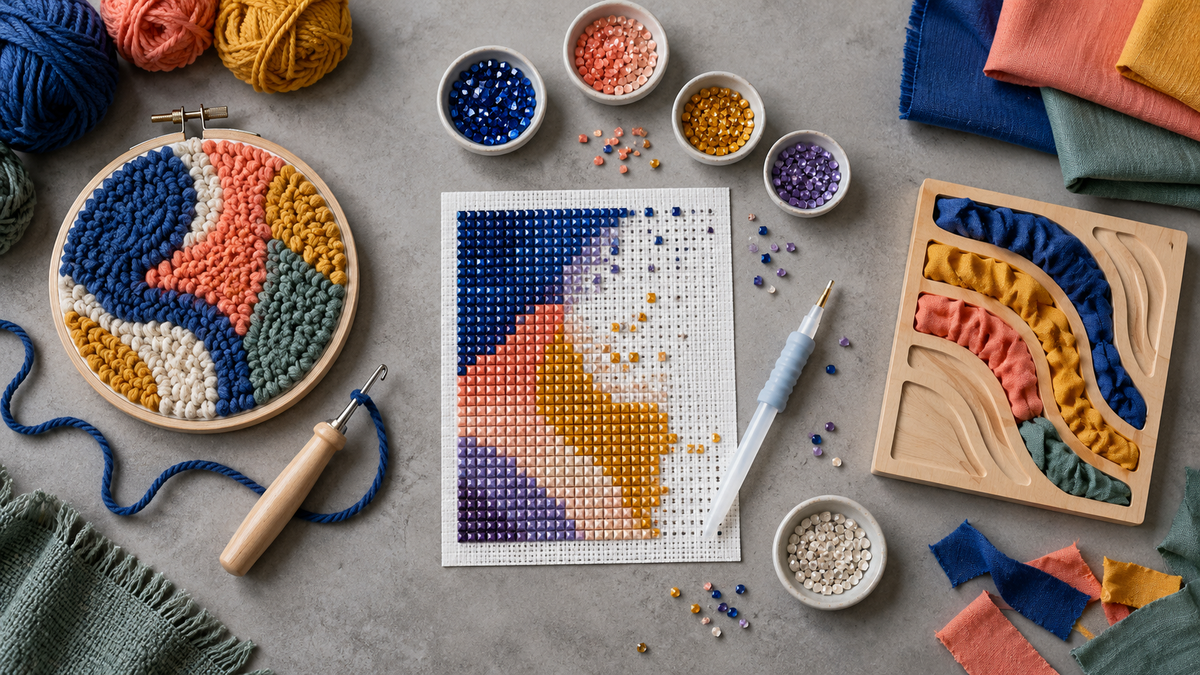
Punch needle, diamond painting and Kinusaiga all turn repeated small actions into decorative art, but the making experience is quite different. Choose punch needle for soft, rhythmic textile work; diamond painting for precise colour-by-symbol placement; or Kinusaiga for shaping fabric into clean picture sections. The best fit depends on the texture, pace and decision-making you enjoy.
The quickest way to choose
Think about what you want your hands to do, not only which finished picture you like. A beautiful design may attract you first, but the technique determines how you will spend most of the project.
- Choose punch needle if you enjoy yarn, soft texture and a repeated punching motion.
- Choose diamond painting if you like organised colour placement, small sparkling pieces and a clearly mapped image.
- Choose Kinusaiga if you enjoy fabric, colour composition and carefully tucking material into defined sections.
None is automatically the “best beginner craft”. The better question is which kind of attention feels inviting to you.
What punch needle feels like to make
Punch needle creates a raised textile surface by using a specialised tool to push yarn through a foundation fabric. The motion is direct and repetitive: place the tool, punch, lift slightly and move to the next point. As an area fills, the design gains visible softness and depth.
This technique may suit you if you prefer larger materials to tiny components. Yarn colour changes are easy to see, and progress can feel substantial as textured sections build. The working side and finished looped side can look different, so following the kit instructions matters when you begin.
Before choosing a project, check the finished size, design, included materials and any display format. Different punch needle kits may use different foundation fabrics, yarn quantities, tools or finishing methods; one product’s contents should not be assumed for another. Browse the current Punch Needle Kits collection and verify the specific product page before ordering.
What diamond painting feels like to make
Diamond painting builds an image by placing small faceted pieces onto a coded adhesive canvas. The core experience is precise and orderly: identify a symbol, select the corresponding colour and place each piece in its marked position.
It may appeal if you like clear instructions and visible completion across a grid. The design decisions have largely been made, so your attention can stay on accurate placement and steady progress. Because the pieces are small, good lighting, a stable surface and sensible storage are important.
Canvas dimensions and design complexity affect the amount of detail and the length of the project, but they do not provide a universal difficulty rating. Our guide to choosing your first diamond painting explains how to compare size, subject and display plans. You can also view the current Diamond Painting collection.
What Kinusaiga feels like to make
Kinusaiga-style fabric art uses pieces of fabric arranged over a grooved base, with the fabric edges tucked into the channels to form defined areas of colour and pattern. The experience sits between picture-making and textile work: you shape each section, manage the fabric edge and gradually reveal a clean composition.
This technique may suit you if selecting and positioning fabric is part of the pleasure. Even when a design supplies the overall structure, fabric placement brings variation in colour, pattern direction and texture. It asks for patient, controlled tucking rather than repeated yarn punching or tiny-piece placement.
Tools and kit contents vary. Follow the current product instructions, keep sharp tools safely covered and use only the tools appropriate to the selected kit. The Kinusaiga collection shows the currently available projects, while the individual product page confirms what is included and what may be required separately.
Compare the three making experiences
| What you are choosing | Punch needle | Diamond painting | Kinusaiga |
|---|---|---|---|
| Main material | Yarn and foundation fabric | Faceted pieces and adhesive canvas | Fabric pieces and grooved base |
| Typical hand action | Repeated punching | Pick up and place | Position and tuck |
| Visual character | Soft and dimensional | Crisp and sparkling | Textile-rich and sectioned |
| Decision style | Follow shapes while building texture | Follow a coded placement map | Shape fabric within defined areas |
| Workspace priority | Comfortable tool angle and yarn control | Bright light and small-piece organisation | Stable base and safe tool handling |
This comparison describes the techniques in general. Always check the exact product because format, contents and instructions can differ.
Choose by the kind of finished object you want
Think about where the finished work might live. Punch needle naturally emphasises surface texture, which can suit soft décor or framed textile art depending on the project. Diamond painting highlights colour and light, making viewing distance and display position worth considering. Kinusaiga reads as fabric art, with pattern and textile detail becoming part of the image.
If your home already contains many finished projects, decide on the display location before choosing the size. Our guide to displaying handmade art without clutter offers practical ways to rotate or group finished pieces.
Choose by how you like to pause
All three crafts can be completed across multiple sessions, but their loose materials need different care. Punch needle requires the yarn and work to remain organised. Diamond painting needs small colours sealed and separated, with the adhesive surface protected according to its instructions. Kinusaiga needs fabric pieces and tools kept with the correct project stage.
Use one project container and leave yourself a clear next-step cue. This reduces the time spent reconstructing your place when you return. The system in our pause-and-return craft guide can be adapted to any of the three.
Frequently asked questions
Which craft uses the largest materials?
Punch needle generally centres on yarn and a handheld tool, while diamond painting uses many small faceted pieces. Kinusaiga uses fabric sections that vary with the design. Check the exact kit dimensions and contents rather than assuming every project follows the same scale.
Which option involves the most colour decisions?
Diamond painting normally follows a coded canvas, so colour placement is highly directed. Punch needle and Kinusaiga may allow different levels of choice depending on the project. A kit with supplied materials will usually provide more guidance than a project assembled from separate materials.
Which is easiest to work on for a short session?
Any can work in short sessions when the project is stored well. Diamond painting offers clear individual placements; punch needle can stop at the edge of a small area; Kinusaiga can pause after a section is secured. Choose the stopping points that make sense for the specific instructions.
Do these crafts require separate tools?
Requirements vary by product. Never assume a tool is included because it appeared in another kit or image. Read the current product page and instructions, and store sharp tools safely away from children and pets.
Can I try more than one technique?
Yes. If you are unsure, choose a modest project in the technique that most appeals to your preferred hand action. Completing or sampling one method will give you better information about what to try next than comparing finished images alone.
Choose the process you want to return to
The most suitable craft is the one whose process interests you after the first impression of the finished design. Soft repeated punching, precise sparkling placement and careful fabric tucking each create a different rhythm. Choose one clear project, read its exact requirements and give yourself enough time to discover whether the technique fits your hands and attention.