
27 September 2026
How to Choose Your First Diamond Painting
By OpenClip
Choose a first diamond painting by comparing the subject, canvas dimensions, design detail and display space—not size alone. This practical guide explains what to look for before you begin.
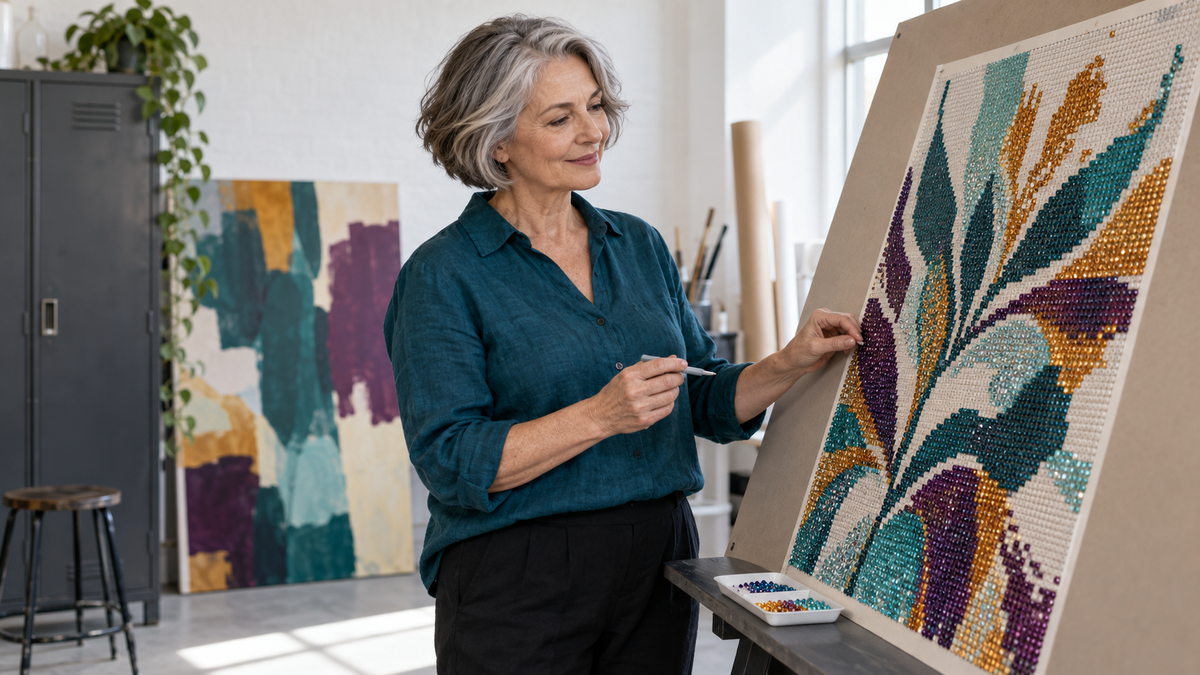
Your first diamond painting should be a design you genuinely want to look at, in a size that fits your space and the amount of detail you enjoy. Start by choosing the subject, then compare the canvas dimensions, symbol clarity and likely display location. A smaller canvas is not automatically easier; a clear design with well-separated areas is often the more useful starting point.
What diamond painting involves
Diamond painting builds a picture from small resin pieces commonly called drills. The canvas is printed with symbols, and each symbol corresponds to a colour. You place the matching drills one small section at a time until the picture is complete.
The basic action is simple to understand, but the experience changes with the design. A picture with large blocks of colour can feel very different from one with frequent colour changes and fine detail. That is why choosing by image alone can be misleading.
Choose a picture you want to spend time with
You will see the same colours and subject throughout the project, so begin with an image that holds your interest beyond the first glance. Flowers, birds, landscapes, animals and seasonal scenes each create a different atmosphere while you work and after the piece is finished.
Think about where the result might live. A soft floral design may suit a bedroom or reading corner; a high-contrast landscape may hold its own in a busier room. You do not need to match the entire room. One or two colours that connect with the surrounding space can be enough.
If you are choosing a gift, consider the recipient’s taste rather than selecting the most elaborate design. A subject they recognise and enjoy will usually matter more than the number of colours.
Understand what canvas size does
Canvas dimensions tell you the physical size of the project, but they do not tell you everything about difficulty. A larger canvas usually contains more placement area, while a small canvas may compress a detailed picture into tighter visual information.
For a first project, compare both the size and the design preview. Look for:
- clear shapes that remain readable at the chosen size;
- a balance of larger colour areas and smaller details;
- colours that are easy to distinguish from one another;
- dimensions that fit your work surface and intended display space.
OpenClip’s current standard collection includes 30 × 30 cm, 30 × 40 cm, 40 × 40 cm and 40 × 50 cm options. Availability and designs vary by product, so check the selected variant rather than assuming every picture comes in every size.
Look for a comfortable level of detail
A design with many colour changes can create rich shading, but it also asks you to switch packets and follow the symbol map more often. A design with broader colour areas may be easier to organise in shorter sessions.
Neither style is better. Choose according to what you enjoy. If you like steady repetition, look for visible blocks of related colour. If you enjoy variety and close visual work, a more detailed image may keep you interested.
Zoom in on the product images where possible. Check whether the important parts of the design—faces, flowers, lettering-like decorative forms or small animals—remain clear. Do not rely only on a distant room mock-up.
Decide how you want to display it
A square canvas, a portrait format and a hanging decoration each create different possibilities. Measure the intended wall, shelf or gift area before choosing. Leave room for any frame or hanging method you may add later.
If you prefer a smaller decorative object rather than a full canvas, the current Diamond Art Hanging Kit includes sunflower birdhouse and Easter wreath designs in compact hanging formats. The designs are sold as selectable variants; check the current product page for the exact option.
A planned display place can also help you finish. It gives the project a purpose without turning completion into a race.
Set up the project before the first placement
Give yourself a clear, stable surface with enough room for the canvas and the colours needed for the current section. Good, even lighting makes symbols and similar shades easier to compare for any maker. If you prefer extra magnification, add it because it makes the process comfortable—not because there is one “correct” way to see the work.
Read the supplied product information and instructions before beginning. Open only the materials you need, keep colour codes with their packets and cover unused adhesive areas as directed. Work on one section rather than exposing the whole canvas at once.
Choose a stopping point before you begin: one colour, one corner or a set amount of time. A clean stopping point makes it easier to store the project and return without wondering where you left off.
Try a seasonal or everyday design
A seasonal picture can be enjoyable when you want a clear display moment or gift occasion. OpenClip currently offers festive diamond paintings in 30 × 30 cm and a 30 × 40 cm Santa-at-the-beach design. These are DIY projects rather than finished pictures.
For something you can display throughout the year, browse the complete Diamond painting collection and compare subject, dimensions and format. Choose the project that suits your taste and available space, not the one that appears most ambitious.
Frequently asked questions
What size diamond painting is best for a beginner?
There is no single best size. A 30 × 30 cm or 30 × 40 cm canvas may fit a smaller workspace, but design clarity matters as much as dimensions. Choose a readable image with a manageable amount of detail.
Is a smaller canvas always easier?
No. A small canvas with intricate subject matter can feel visually busy. Compare the design preview, colour changes and symbol layout as well as the measurements.
How long does a diamond painting take?
Completion time varies with canvas size, design detail, session length and individual pace. No universal time should be assumed unless a product provides a verified estimate.
Do I need to finish it in long sessions?
No. Diamond painting can be divided into small sections. Keep the colour codes organised, cover unused adhesive and leave a clear note or visible stopping point for next time.
Should I choose a framed or unframed design?
Choose according to the current product specification and how you want to display it. Never assume a frame is included: read the selected variant and product details before ordering.
Your first diamond painting does not need to be the smallest or the simplest. It needs to fit your space, suit the way you like to work and show an image worth returning to. Choose the subject first, check the detail at its actual size, then enjoy building the picture section by section.