
24 August 2026
How to Store Pantry Staples in Humid Weather
By OpenClip
Humidity can affect the texture and quality of flour, grains, crackers, nuts and other dry foods. Use this practical routine to keep pantry staples dry, organised and easier to use.
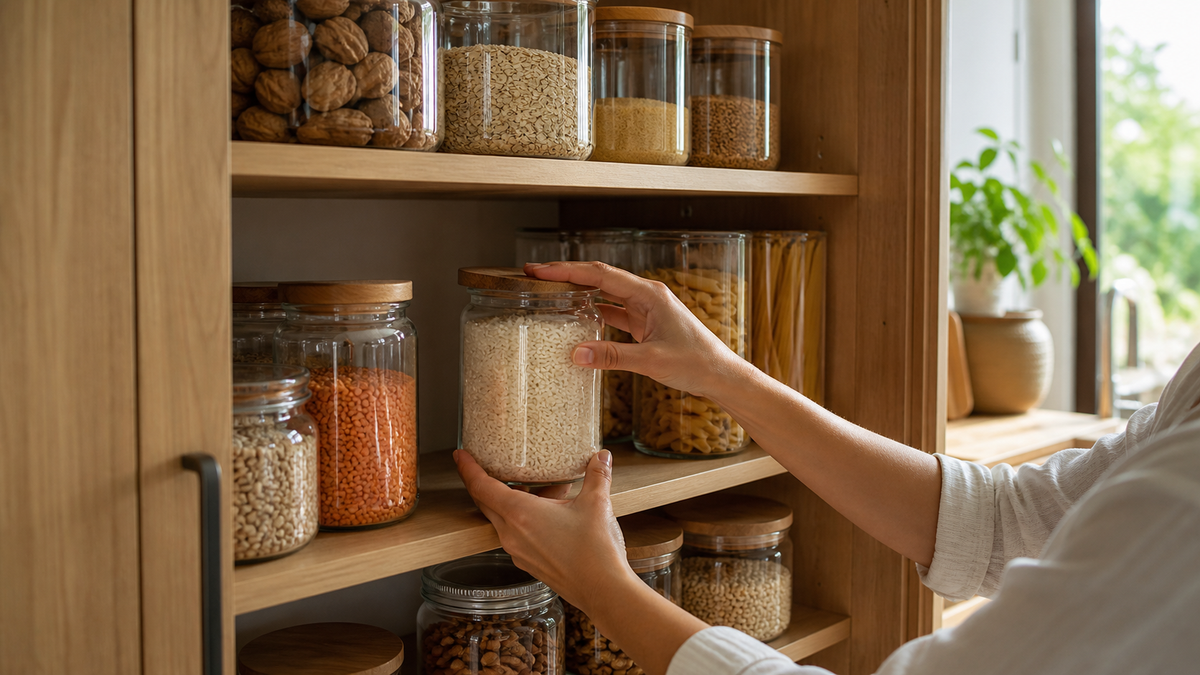
To store pantry staples in humid weather, keep them in a cool, dry cupboard away from heat and steam, transfer opened foods to clean airtight containers, buy amounts you can use, and rotate older stock first. Check packages regularly for moisture, mould or pantry pests. Vacuum storage may help protect suitable dry foods from air and humidity, but it cannot rescue damp or contaminated food.
Why humidity changes pantry storage
Many dry foods stay pleasant because they contain little available moisture. In a humid kitchen, opened crackers may soften, powders may clump, and nuts or wholegrain products may lose quality more quickly. Moisture can also create conditions in which mould becomes a concern.
The cupboard location matters as much as the container. A pantry beside an oven, dishwasher or kettle may experience more heat and steam than a cupboard in a cooler part of the kitchen. Seasonal weather, coastal conditions and household ventilation can all change the environment, so a routine that works in winter may need adjustment during a humid summer.
Choose the driest practical storage area
Store dry food away from the stove, sink, dishwasher and direct sunlight. Avoid cupboards with visible condensation, water staining or a persistent musty smell. Fix leaks and moisture problems before returning food to the area.
Keep packets and containers off the floor, where they are more exposed to cleaning water, pests and unnoticed leaks. Shelves should be easy to wipe and should allow you to see the back of the cupboard without moving every item.
Start with clean, completely dry containers
Airtight storage is only helpful when both the food and container are dry. Wash reusable containers according to their care instructions, rinse them thoroughly and allow every part to dry before refilling. Pay attention to lid grooves, seals, bag closures and valves where small drops can remain.
Do not pour new food on top of old crumbs. Empty the container, inspect it, clean and dry it, then refill. This reduces the chance of hiding stale food or pantry-pest activity beneath a fresh purchase.
Match the container to the food
Choose a food-safe container with a reliable closure and enough capacity for the contents without excessive empty space. Clear containers make stock levels and unusual changes easier to spot, although foods that are sensitive to light should still be kept in a dark cupboard.
- Flour and baking ingredients: use a dry, easy-to-scoop container with a secure lid.
- Rice, pasta and grains: choose containers that close fully and can be lifted safely when full.
- Crackers and cereal: minimise time with the container open, especially on humid days.
- Nuts and seeds: buy manageable quantities and consider cooler storage when the product instructions recommend it.
- Dried fruit: keep pieces dry and use clean utensils rather than damp fingers.
Keep original cooking directions, allergen information, batch details and best-before dates. You can place the labelled inner packet inside a larger container or copy essential details onto a removable label.
Use vacuum storage selectively
Compatible reusable vacuum bags can reduce the air around suitable dry foods, which may help protect texture and make portions compact. They are not appropriate for every ingredient or every storage period.
Only package food that is dry and in good condition. Fine powders can be drawn towards a valve, while sharp pasta edges may puncture flexible material. Use an appropriate barrier or choose a rigid container when the food could interfere with the seal. Keep the closure and valve clean, inspect the bag for damage, and follow the bag and appliance instructions.
Vacuum storage does not sterilise food, stop every form of spoilage or replace the storage directions on the package. Do not seal food that shows dampness, mould, insects or an unusual odour.
Buy quantities that fit your routine
A lower unit price is not useful if a large pack becomes stale or is forgotten. Estimate how much the household normally uses before the best-before date, then choose a pack size that suits that pace.
When buying from bulk bins, use the clean bags or containers provided by the retailer and avoid mixing a new purchase with an older batch until you have checked and cleaned the home container. People with food allergies should also consider cross-contact risks and retailer information before buying unpackaged foods.
Label and rotate pantry stock
Write the food name and purchase or opening date where it will remain visible. Put newer items behind older ones and use the older suitable food first. Best-before dates generally relate to quality, while use-by dates relate to safety; follow the label and current Australian food-safety guidance.
A brief weekly scan works better than an occasional deep search. Look for open packets, loose crumbs, cloudy containers, clumping, damaged seals and foods nearing their dates. Add nearly finished staples to the shopping list before buying duplicates.
Watch for pantry pests
Pantry moths and beetles can arrive in packaged dry goods and spread through a cupboard. Possible signs include webbing, larvae, insects, small holes in packaging or unusual dust around a product.
If you find an infestation, isolate the affected food and inspect nearby items carefully. Dispose of contaminated products in a sealed rubbish bag, then vacuum shelves and crevices and clean the cupboard. Follow local pest-control and food-safety advice if the problem persists. Do not use insecticide on food or food-contact surfaces unless the product is specifically approved and its directions are followed.
Do not rely on a smell test alone
Dry foods can show obvious quality problems, but appearance and smell do not identify every hazard. Discard food with visible mould, moisture damage, pest contamination, damaged packaging or an uncertain history. If floodwater, dirty water or chemicals have contacted food or packaging, follow emergency food-safety guidance rather than attempting to dry or repackage it.
For products with special storage needs, follow the manufacturer’s label. Once opened, some foods that look shelf-stable may need refrigeration.
A simple humid-weather pantry routine
- Choose a cool cupboard away from steam and direct sun.
- Check that shelves and containers are clean and fully dry.
- Inspect new packages before storing them.
- Transfer opened dry food to suitable airtight storage.
- Keep important label and allergen information.
- Date containers and rotate older stock forward.
- Check weekly for dampness, damaged seals and pests.
- Buy quantities the household can realistically use.
The practical takeaway
Humid-weather pantry care is mostly about controlling exposure and noticing problems early. A dry cupboard, clean airtight storage, realistic quantities and regular rotation can help pantry staples retain their intended texture and quality. Use vacuum storage only for compatible dry foods, and discard anything affected by moisture, mould or pests rather than trying to save it.