
2 November 2026
How to Turn a House or Garden Photo Into a Custom Kinusaiga Pattern
By OpenClip
Choose a clear house or garden view, simplify foliage and preserve the few architectural and colour details that make the place recognisable.
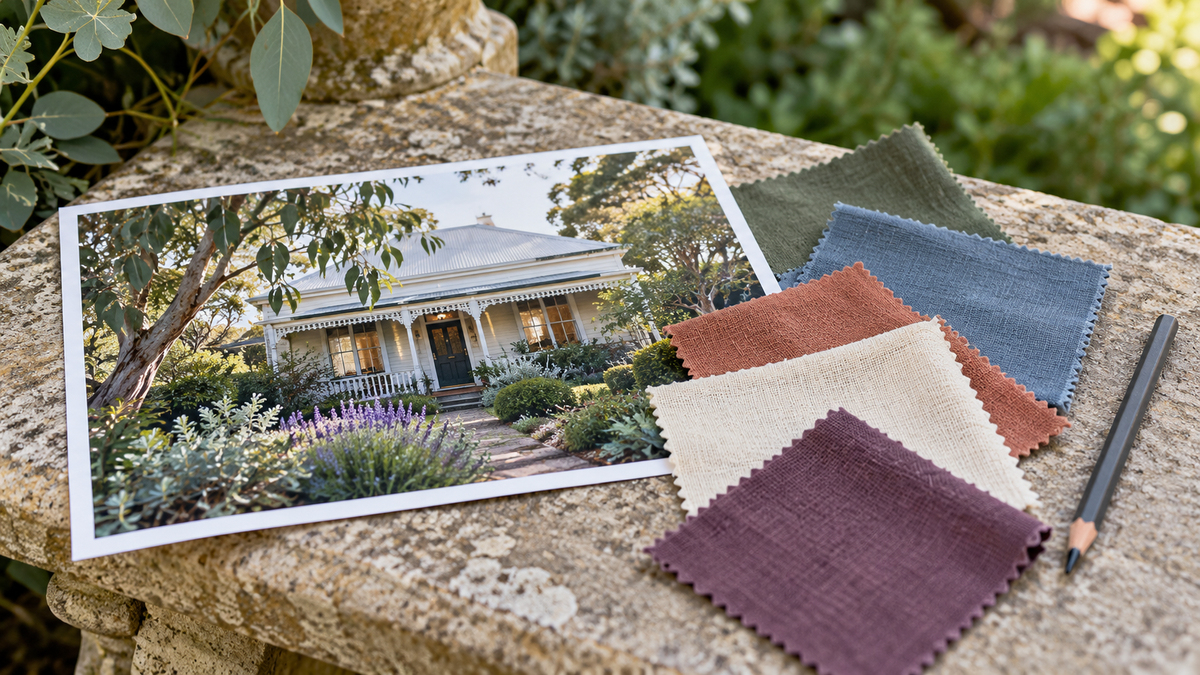
A house or garden photo can become a personal Kinusaiga design when the image has one clear architectural subject, a readable outline and a small number of important landscape details. Choose the view that feels most recognisable, then simplify plants, shadows and background clutter before submitting it. The aim is not to reproduce every leaf—it is to preserve the character of the place.
Choose the view that feels like the place
The most technically perfect photograph is not always the most meaningful one. Begin by asking what makes the home or garden recognisable to you: a verandah, coloured door, roofline, favourite tree, curved path or particular view through a gate.
Look for a photo in which that feature is easy to see. A front-on view often makes architecture clearer, while a slight angle can show depth and the relationship between the building and garden. Extreme wide-angle photographs may bend straight lines, and very distant views can make important details too small.
If the property belongs to someone else, make sure you have permission to use the image. Avoid submitting visible addresses, number plates, people or private details that are not needed for the design.
Keep the building silhouette readable
A strong outline gives the design structure. Check that the roof, walls, windows and entrance do not disappear into heavy shade or dense foliage. Trees can frame a house beautifully, but branches that cross every edge may make the main shape harder to interpret.
Try viewing the photo as a small thumbnail. If you can still recognise the building, the main silhouette is probably doing enough work. If it becomes a mass of leaves and shadow, choose a clearer angle or crop more tightly.
For a garden without a building, identify a different anchor: a bench beneath a tree, a distinctive archway, a pond edge or a path leading to one focal plant. One clear anchor is more useful than a photograph containing every part of the garden.
Decide which garden details deserve to stay
Gardens contain hundreds of small shapes. A fabric interpretation usually reads more clearly when those details are grouped rather than copied individually. Think in broad areas: dark foliage, a flowering border, pale gravel, lawn, sky and the building itself.
Choose two or three details that carry the memory. Perhaps the lavender border matters because it was planted together, or the old gum tree defines the view from the kitchen. Mention those in your design notes. Less meaningful background foliage can be simplified.
Do not ask for every leaf, brick or railing spindle to remain exact. Too many tiny divisions can compete with the main subject. A simpler design can still feel specific when the proportions, silhouette and signature colours are right.
Use light that shows form without harsh contrast
Bright midday sun can create deep black shadows beneath eaves and trees. Flat grey light can make the building and sky blend together. If possible, photograph in open shade or softer morning or late-afternoon light, when the structure remains visible and colours are easier to compare.
Check windows carefully. Strong reflections can introduce unrelated shapes, while very dark glass may read as empty black blocks. You do not need to remove every reflection, but choose a frame where the windows support rather than distract from the architecture.
If the only meaningful photo has difficult light, include a second reference image that shows the colours more clearly. Keep one image as the main composition and label the other only as a colour reference in your notes.
Build a restrained colour plan
Start with the colours that make the place recognisable, then reduce the rest. A useful palette might include the wall colour, roof or trim, one foliage green, one garden accent and a neutral for paths or sky.
- Keep the distinctive door or trim colour if it carries the character of the house.
- Group similar greens instead of trying to match every plant.
- Use one flower colour as an accent rather than scattering many small colours.
- Separate the building from the garden with enough light–dark contrast.
- Note whether you prefer the photograph’s natural colours or a quieter interpreted palette.
Our guide to testing a craft colour palette can help you compare broad colour relationships before buying materials.
Prepare a practical submission checklist
Before sending the photo, gather the information that will reduce guesswork:
- one main image at the best available resolution;
- a short sentence identifying the central subject;
- two or three must-keep features;
- anything that may be removed, such as bins, cars, signage or temporary objects;
- any colour changes you want considered; and
- a second image only when it clarifies colour or an obscured feature.
OpenClip’s current custom digital Kinusaiga pattern option is A$9.99 per design. It is delivered by email as digital PDF files, with the live service page currently stating 1–3 business days. Fabrics, foam, tools and other physical materials are not included. The digital option is not a finished artwork, physical kit or complete materials bundle.
Turn a meaningful place into a clear making plan. Review the live requirements and submit your source image on the Custom Kinusaiga design page.
Plan how the finished piece might be used
A place-based design can mark a move, remember a family home, celebrate a garden or preserve the view of a building that has changed. Decide whether the final project is for you, for someone connected to the place or as a shared gift.
If you intend to make and display the work, think about where it will sit before choosing a palette. A quieter wall may support stronger garden colours; a patterned room may suit a simpler interpretation. Our guide to displaying small fabric art without crowding a wall offers practical ideas for the finished piece.
The best result does not need to catalogue every element of the property. Preserve the roofline, path, tree or colour that makes you say, immediately, “that is the place”.
Frequently asked questions
Can a garden photo work without a house in it?
Yes, if it has one clear anchor such as a path, tree, archway, bench or pond edge and enough contrast to separate the main areas.
Should I remove cars, bins or house numbers from the photo?
You do not need to edit the file yourself. Use the design notes to identify temporary or private details that may be removed or simplified.
Is the A$9.99 option a finished artwork?
No. It is a custom digital PDF design delivered by email. It is not a finished artwork, physical kit or complete materials bundle.
Are fabrics and tools included?
No. Fabrics, foam, tools and other physical materials must be purchased or gathered separately for the digital PDF option.