
24 September 2026
Can Crafting Help You Focus? What the Research Says
By OpenClip
Small studies suggest that some hands-on creative activities may support selected aspects of attention, but the evidence is narrow. Here is what crochet and creative-programme research found, what it cannot prove, and how to set up a making session with fewer distractions.
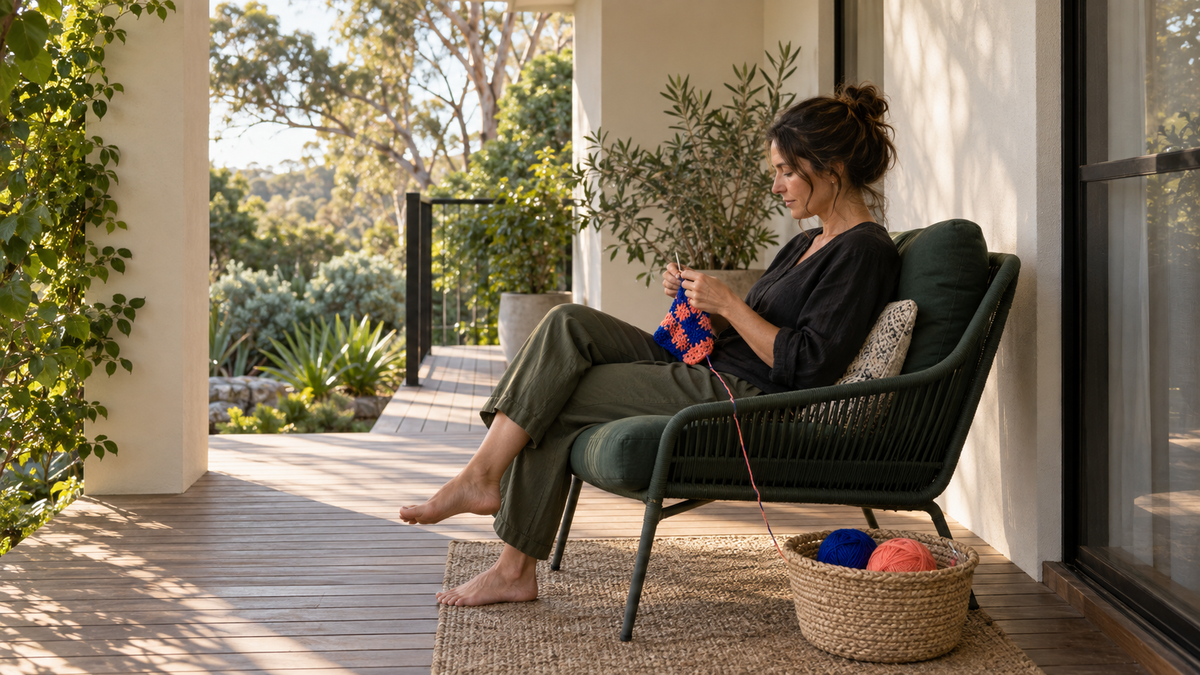
Can crafting help you focus? Small studies suggest that some hands-on creative activities may support particular aspects of attention, especially when a maker is learning or practising a sequence of movements. The evidence is promising but narrow: it does not prove that every craft improves focus, and it does not make crafting a treatment for an attention condition.
What “focus” means in craft
Focus can sound like one simple ability, but researchers often divide attention into several processes. You might need to become alert when something changes, orient towards the relevant part of a pattern, hold the next step in mind, or ignore a distraction. A craft session can ask for several of these at once.
That does not mean a busy project is automatically better. A familiar stitch may feel pleasantly rhythmic, while an unfamiliar technique may demand careful checking. Both can create an absorbed experience, but they are not identical tasks and may not affect attention in the same way.
What a crochet study found
A 2025 study in Scientific Reports compared experienced crocheters with a control group after a single session. The final analysis included 36 people in the crochet group and 11 in the control group. Researchers used the Attention Network Test, which separates alerting, orienting and executive control.
After crocheting, participants responded faster on measures linked to alerting and orienting. The researchers did not find the same improvement for executive control. Both groups became more accurate, which is one reason the results should be interpreted carefully.
This is interesting evidence that a learned motor activity can be associated with short-term changes in selected attention measures. It is not proof that crochet improves every kind of focus. The sample was small and uneven, participants already knew how to crochet, and the study measured what happened around one session rather than long-term change.
What a longer hands-on programme found
Another study tested a 12-week “MONOZUKURI” programme with 51 community-dwelling older adults in Japan. Twenty-nine people completed hands-on sessions combining accessory making and creative cooking, while 22 attended health lectures as an active control. The study was randomised, which strengthens the comparison.
The hands-on group showed a better result on Trail Making Test Part B, a task often used to assess flexible attention and executive function. However, the programme combined several activities, involved older adults in one country and was delivered as organised weekly sessions. It cannot tell us that a particular craft will produce the same result for everyone at home.
Taken together, these studies suggest that making can be cognitively engaging. They do not establish a universal recipe for better concentration.
Absorption is not the same as a laboratory result
Many makers describe losing track of time while following a row, sorting colours or repeating a small movement. Researchers often discuss this kind of deep involvement as “flow”. Flow is an experience of absorption; attention tests measure performance on specific tasks. Feeling immersed in a project and scoring differently on a test are related ideas, but they should not be treated as interchangeable.
A craft can also be frustrating when the challenge is too high, the instructions are unclear or the materials are not ready. Choosing a task that is just demanding enough may make it easier to stay with the process.
How to set up a more focused making session
Choose one clear next step
Instead of beginning with “finish the project”, choose a smaller action: make one row, arrange one colour group or prepare the pieces for the next stage. A visible stopping point reduces the amount you need to hold in mind.
Keep the challenge adjustable
If you are new, begin with a short repeat or a simple motif. If the process feels automatic, add one controlled challenge such as a new colour, stitch or shape. The aim is not maximum difficulty; it is a task you can understand and still find interesting.
Prepare the materials first
Put the tools and materials for the immediate step within reach, then move unrelated items away. This is practical rather than scientific magic: fewer searches and interruptions give you more time with the activity itself.
Give the session a small boundary
A 20-minute window can feel easier to enter than an open-ended afternoon. Silence non-essential notifications, decide where you will stop and leave a note for the next step. There is no research-backed perfect session length, so choose one that fits your day.
A gentle project for practising a sequence
Crochet is one option when you enjoy repeated movements with a visible result. The OpenClip Animal Crochet Kit includes yarn, a crochet hook, yarn needle, stitch markers, eyes, stuffing and printed instructions for the selected animal design. You can pause between stages and continue at your own pace. It is a product for making, not a focus treatment, and no particular cognitive outcome is promised.
If your mind is crowded, it can also help simply to protect a little room for making. Our Journal guides on making time for a creative hobby and what research says about creative hobbies and everyday stress offer two different places to start.
Frequently asked questions
Is crafting proven to improve focus?
No. Small studies have found changes in specific attention or executive-function measures after particular hands-on activities, but the evidence is not broad enough to say that all crafts improve focus for everyone.
Which craft is best for concentration?
Research has not established one best craft. A suitable activity is one with clear steps, an adjustable challenge and materials you can handle comfortably.
Can crafting treat ADHD or another attention condition?
No. Crafting should not be presented as treatment or as a replacement for professional support. Someone with an attention condition may enjoy making, but individual experiences vary.
How long should a craft session be?
There is no universal evidence-based duration. Start with a manageable window, such as 15 or 20 minutes, and adjust according to the project and your energy.
What if my attention keeps wandering?
Make the next step smaller, remove one distraction or choose a more familiar technique. Wandering attention is not a failure; it may be useful information that the task or setting needs adjusting.
Research referenced
- García-Cordero and colleagues, “Crochet increases attention through a requiring motor skill learning”, Scientific Reports (2025). Read the study.
- “Effects of the MONOZUKURI Program on Cognitive Function in Older Adults”, randomised controlled trial (2025). Read the full text.
The useful conclusion is modest: hands-on making can ask a lot of attention in a contained, approachable way. Pick a process you genuinely like, make the next step clear and let the session be worthwhile without requiring it to transform your concentration.