
22 September 2026
Can Creative Hobbies Help With Everyday Stress? What the Research Says
By OpenClip
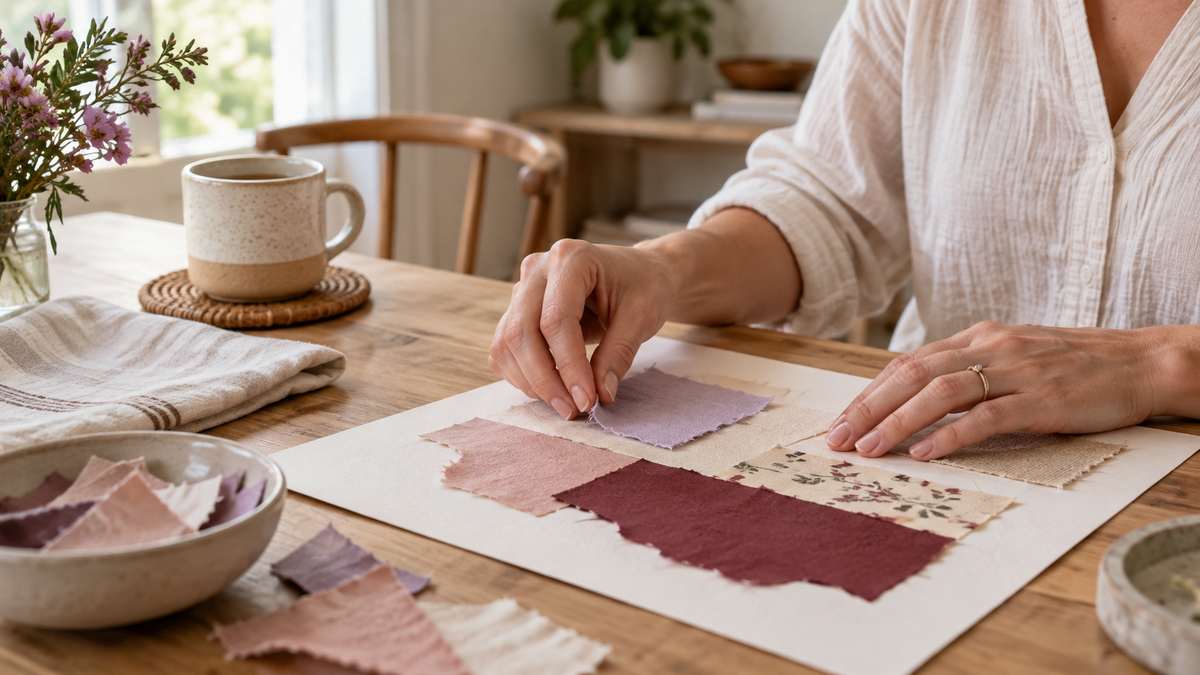
Creative hobbies may help some people feel calmer and more settled, but the evidence is not strong enough to promise that crafting reduces stress for everyone. Small experiments, large observational studies and a recent craft-focused review offer encouraging signals. They also have important limits. The most useful takeaway is simple: choose a making practice you enjoy, keep expectations gentle and notice how it fits your own life.
Why the answer is more nuanced than “crafting is proven to reduce stress”
Making something by hand can feel absorbing. It gives your attention a clear, manageable task: choose a colour, place a piece, make a stitch or repeat a small movement. That experience matters, but a personal feeling and a scientific conclusion are not the same thing.
Research in this area covers different activities, populations and outcomes. “Creative activity” may mean drawing, collage, textiles, ceramics or a structured therapeutic programme. “Stress” may mean a participant’s own rating, a biological measure such as cortisol, or symptoms recorded in a clinical group. Results from one setting cannot automatically be applied to every craft or every person.
What a small art-making study found
In a 2016 quasi-experimental study, 39 healthy adults took part in 45 minutes of visual art making. Participants could use materials for activities including collage, modelling clay and drawing. Salivary cortisol was measured before and after the session, and the researchers found a statistically significant reduction after art making.
That is an interesting short-term result, not a universal rule. The study had no non-art control group, included only 39 people and looked at one session. It also examined a choice of visual art activities rather than a particular craft such as crochet, punch needle or Kinusaiga. It cannot tell us whether regular crafting causes lasting stress reduction.
What a much larger survey suggests
A 2024 study analysed data from 7,182 adults in England who took part in the 2019–2020 Taking Part Survey. After accounting for several demographic and health variables, participation in creating arts and crafting was associated with higher reported life satisfaction, a stronger sense that life was worthwhile and greater happiness.
The scale of the dataset makes the association worth noticing. However, this was an observational, cross-sectional analysis. It captured a point in time and could not establish that crafting caused the wellbeing differences. People who feel better may be more able or inclined to take part in creative activities, and other unmeasured factors may influence both.
What the craft-specific evidence says
A 2025 systematic review brought together 19 studies of craft-based interventions for adults experiencing mental-health difficulties or anxiety, depression or stress related to chronic or life-threatening illness. The review found that crafts were generally perceived positively, but the included studies varied widely in their activities, designs and outcome measures.
The authors highlighted methodological weaknesses, small samples and a shortage of longer-term follow-up. Most studies included fewer than 50 participants. The review therefore does not support a simple claim that any craft will reduce everyday stress for anyone. It does show why researchers see hands-on making as a promising area that deserves better-designed studies.
What this means for an everyday creative hobby
You do not need to turn a hobby into a health programme to value it. A creative session can be worthwhile because you enjoy the colours, like learning a technique or want a quiet alternative to scrolling. Those are complete reasons on their own.
If you would like to explore whether making helps you unwind, treat it as a personal experiment rather than a performance target:
- Choose an activity you actually like. A fashionable craft that feels frustrating is unlikely to become restorative personal time.
- Make the first step easy. Put a small project and its materials together so starting does not require a full room reset.
- Use a realistic window. Twenty calm minutes can be more inviting than an ambitious afternoon you keep postponing.
- Remove the deadline. A hobby is allowed to move slowly. Progress and completion do not need to happen in the same sitting.
- Notice, rather than judge. After a session, ask whether you enjoyed it, whether your attention settled and whether you would like to return. There is no required result.
If you are curious about fabric-based making, the Kinusaiga Fabric Art Kit is one current option to explore. Check the live product page for the exact design and contents before choosing. You can also read our guide to making time for a creative hobby without rushing for practical ways to begin.
Keep the claims—and the expectations—gentle
Craft can sit comfortably alongside rest, movement, social contact and other ordinary ways people look after themselves. It should not be presented as treatment for anxiety, depression, trauma, ADHD or another health condition. If stress is persistent, overwhelming or affecting daily life, seek advice from an appropriately qualified health professional.
It is also fine if crafting does not feel calming. Some people prefer energetic activities, social hobbies or making with a clear challenge. Others enjoy the occasional frustrating stage because solving it is part of the satisfaction. The best creative hobby is not the one with the boldest wellbeing claim; it is the one you genuinely want to keep meeting at the table.
Frequently asked questions
Is crafting scientifically proven to reduce stress?
No. Some studies report positive short-term results or associations with wellbeing, but the evidence varies in quality, activity and population. It does not establish that every craft reduces stress for every person.
Which craft is best for unwinding?
Research does not identify one universally best craft. Start with an activity whose materials, pace and level of challenge appeal to you, then notice how the experience feels.
How long should a creative session be?
There is no evidence-based duration that suits everyone. Choose a practical window that feels easy to begin, whether that is 15 minutes or a longer weekend session.
Does a project need to be finished to be worthwhile?
No. Enjoyment, curiosity and time spent learning can be worthwhile even when a project remains unfinished. Completion is one possible outcome, not the only measure of a good session.
Can craft replace professional mental-health support?
No. A creative hobby can be part of everyday life, but it is not a substitute for appropriate professional care when support is needed.
Research referenced
- Kaimal, G., Ray, K. and Muniz, J. (2016), Reduction of Cortisol Levels and Participants’ Responses Following Art Making, Art Therapy. A small, uncontrolled, short-term study of 39 healthy adults.
- Keyes, H. et al. (2024), Creating arts and crafting positively predicts subjective wellbeing, Frontiers in Public Health. A cross-sectional analysis of 7,182 adults in England; associations do not establish causation.
- The effects of crafts-based interventions on mental health and well-being: A systematic review (2025), Australian Occupational Therapy Journal. The review included 19 varied studies and identified substantial methodological limitations.