
7 September 2026
A Simple First Practice Routine for Junior Pickleball
By OpenClip
A good first junior pickleball practice is short, supervised and built around simple repeatable movements rather than scores. Set up the tether trainer on a clear, level area, inspect the base, cord and ball, begin with gentle swings, and stop while the session still feels enjoyable. The junior paddle can later be used separately for easy family rallies with suitable pickleballs.
Start with the right goal for session one
The first practice does not need to look like a match. The practical goal is to help a younger recreational player become familiar with holding the paddle, watching the ball and making a comfortable swing in a controlled space. A few clean contacts are enough for one session.
The OpenClip Junior Pickleball Paddle Training Set pairs a junior-sized fibreglass paddle with a tethered practice ball and training base. The ball returns towards the base after a hit, making it possible to repeat gentle swings without collecting a loose ball after every attempt.
Know what the set is—and what it is not
The current single-set product description includes one junior paddle, one tethered practice ball and one training base. The paddle is approximately 39.8 × 19.6 cm and about 200 g, with a fibreglass face. Current colour choices are Orange Monster, Pink Monster and Blue Monster.
The trainer is positioned for junior recreational practice. No tournament approval, coaching outcome or skill-improvement rate is claimed. It is a way to create repeated swings in a small practice routine, not a replacement for adult supervision, professional instruction or normal rallies with a free-moving pickleball.
Prepare a clear practice area
Choose a level space with room for the paddle, the returning tethered ball and an adult supervisor. Remove chairs, bags, toys, drink bottles and anything else that could be struck or tripped over. Keep other children and pets outside the swing area.
Follow the product instructions for placing the base. Before every session, inspect the paddle, base, cord and ball. The tether should run only between the base and ball, without knots, tangles, fraying or visible damage. Stop using any damaged part.
Outdoor practice should happen only in suitable conditions. Avoid wet or slippery ground, strong wind and crowded areas. A quiet court or flat sheltered recreation space makes it easier to keep the practice zone defined.
A simple 15-minute first-practice routine
Fifteen minutes is a planning example, not a required duration. Shorten the routine if attention or comfortable technique begins to fade. Adult supervision should continue from setup through pack-down.
Minutes 1–3: hold and move the paddle
Begin without striking the ball. Let the player hold the paddle comfortably, make a few slow forward movements and practise stopping the paddle under control. Keep the motion easy. There is no need to copy an adult-sized swing or hit hard.
Minutes 4–7: gentle contact
Position the player at a sensible distance from the base according to the supplied setup instructions. Start with gentle swings and watch how the tethered ball returns. Pause after each contact until the path is clear. If the cord tangles or wraps around the base, stop and reset it before continuing.
Minutes 8–11: repeat a comfortable rhythm
Once the return path is predictable, try a small group of repeat swings. Count a few controlled contacts, then take a break. The aim is consistency and comfort, not maximum speed. Reset the equipment whenever the returning ball becomes difficult to track.
Minutes 12–15: finish with an easy success
End with the easiest version of the activity. That might be three gentle contacts, a slow swing without the ball, or simply naming the parts of the kit during pack-down. Finishing before frustration builds makes the next session easier to approach.
Move from tether practice to a family rally
The junior paddle can be used separately from the tether system with independently supplied pickleballs. When a player is ready, move to a short family rally in a clear space or on a booked court. Begin close together and use gentle feeds rather than serving from the baseline.
The training set does not include loose rally balls in the single-set contents currently described. If you need them, compare the OpenClip Outdoor Pickleballs 6 Pack and read our guide to choosing outdoor pickleballs for Australian social play.
For a broader explanation of paddle materials and adult recreational options, see how to choose a pickleball paddle for beginners. Junior sizing and adult paddle selection should be treated as separate decisions.
Keep instructions small and specific
One clear cue is easier to use than a list of corrections. Try a simple instruction such as “watch the ball”, “swing gently” or “stop and reset”. Give time to try it before adding another cue. Avoid promising that a drill will produce a particular result.
You can also vary the session without making it harder:
- practise two or three contacts, then pause;
- alternate between a swing and a full equipment reset;
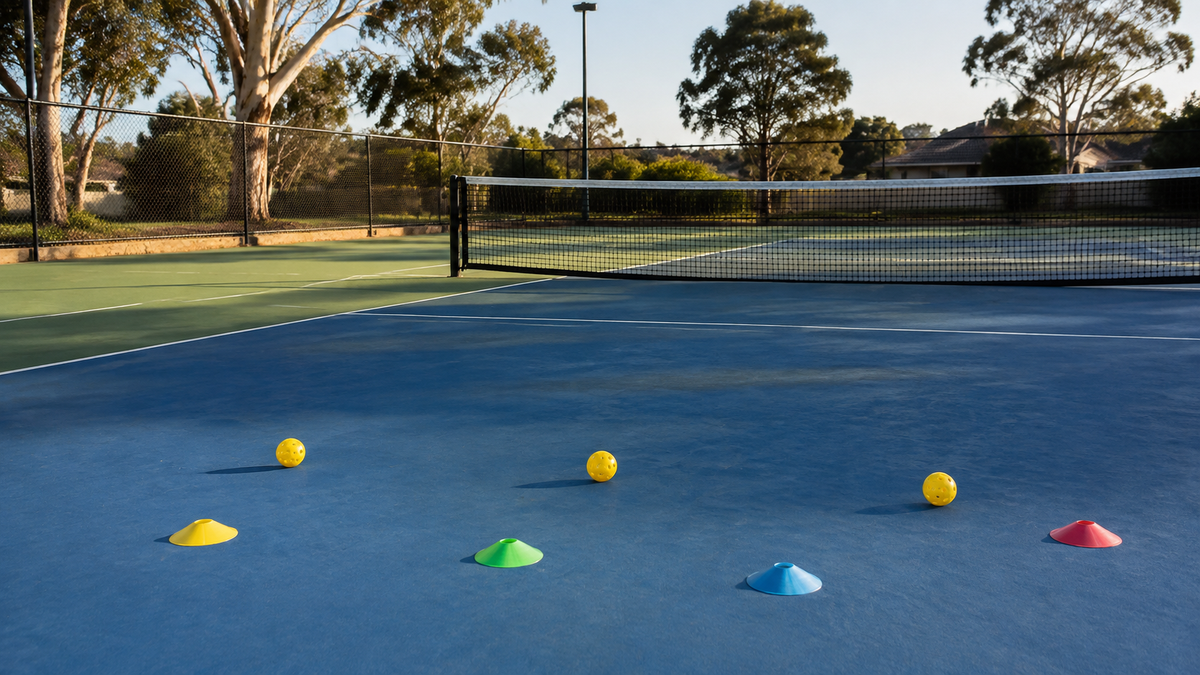
- place flat markers outside the swing zone to define where the supervisor stands; or
- finish with a few gentle free-ball feeds when the tether is packed away.
Pack down with the same care as setup
Stop play before picking up the base. Check the tether for twists or damage, then store the ball, cord and base so the cord is not tightly knotted. Keep the paddle dry and avoid leaving the set in a hot vehicle. Check all parts again before the next practice.
The current product page states that a carry bag is not included with the described single set. Choose a storage place that keeps every part together and prevents the tether from mixing with unrelated toys or equipment.
Junior pickleball practice checklist
- Adult supervisor present for setup, practice and pack-down
- Clear, level practice area with other people and pets outside the swing zone
- Paddle, base, tether and ball inspected before use
- Cord free from knots, tangles, fraying and visible damage
- Gentle swings and short blocks of repetition
- Immediate pause if the tether tangles or the ball path becomes unclear
- Equipment packed together after the session
Frequently asked questions
What is included in the junior pickleball training set?
The current single-set description includes one junior fibreglass paddle, one tethered practice ball and one training base. A carry bag and separate rally pickleballs are not listed with that single set.
How big is the junior paddle?
The current product specification lists an approximate size of 39.8 × 19.6 cm and an approximate weight of 200 g. Both figures are product specifications rather than guarantees for every individual unit.
Can the paddle be used without the tether trainer?
Yes. The paddle is separate from the tether system and can be used for recreational family rallies with suitable pickleballs supplied independently.
Does a child need adult supervision?
Yes. The product instructions require adult supervision. Inspect every part before play, keep the swing area clear and stop using any damaged component.
Is the junior training set tournament approved?
No tournament approval is claimed. The product is positioned for junior recreational play and practice.
Make the first session simple
A clear space, inspected equipment and a few gentle swings are enough for a useful introduction. View the OpenClip Junior Pickleball Paddle Training Set to compare the current colour and pack options, then choose the setup that matches your household.