
25 October 2026
Does Learning a New Craft Improve Memory? What One Trial Found
By OpenClip
A 14-week trial linked demanding new-skill learning with better episodic memory, but quilting alone did not show a statistically significant result.
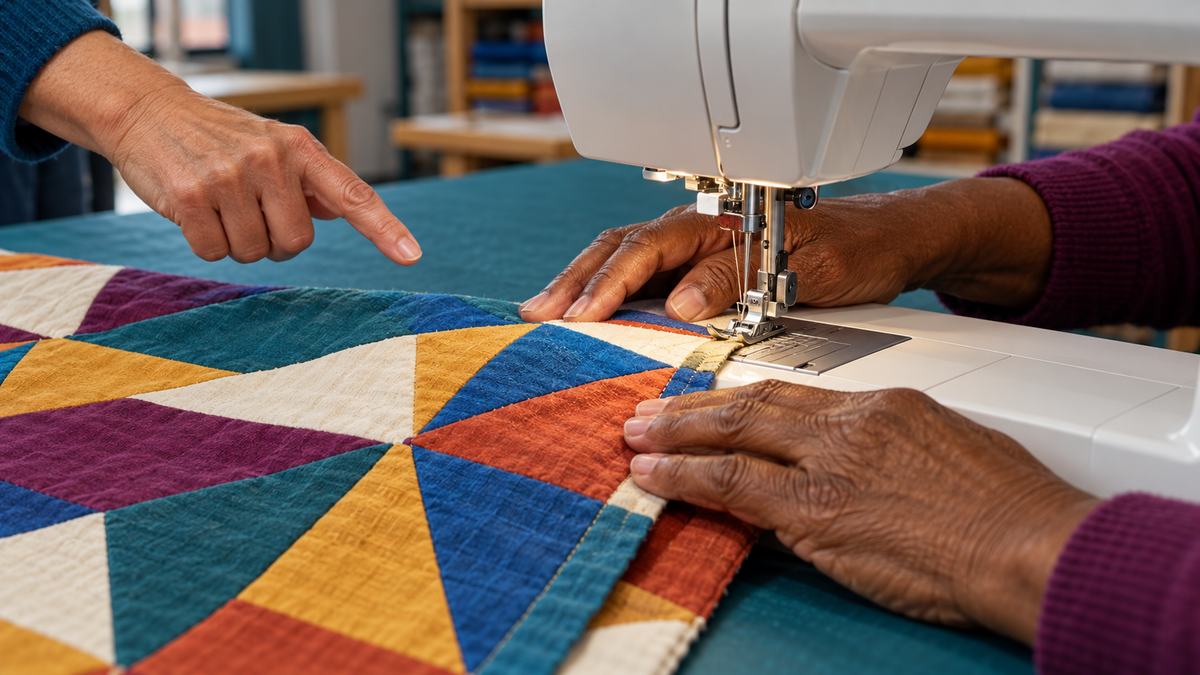
One controlled study found that older adults assigned to sustained, demanding learning—digital photography, quilting or both—improved on a combined measure of episodic memory compared with lower-challenge groups. The result does not prove that any casual craft improves memory. Quilting alone did not reach statistical significance, and the program required roughly 15 hours a week for 14 weeks.
What the Synapse Project tested
The Synapse Project asked a focused question: does actively learning unfamiliar, increasingly complex skills make a difference to cognition compared with activities that rely more heavily on existing knowledge?
The trial enrolled 259 adults aged 60 to 90 in Dallas, Texas, and 221 completed the 14-week program. Participants were novices in quilting and digital photography. They could rule out one of the three high-challenge conditions before being randomly assigned among the remaining eligible options, an accommodation intended to support interest and participation.
The three “productive engagement” conditions involved learning digital photography, learning quilting, or dividing the program between both. Classes were taught in small groups, with formal instruction and substantial project work. Across these groups, participants spent an average of about 16.5 hours each week on the program.
The comparison conditions included a social group with outings and familiar activities, a home-based group doing lower-demand tasks, and a no-treatment group. This structure helped the researchers separate the challenge of acquiring new skills from social contact or activity alone.
What the study found about memory
After the program, the combined productive-engagement groups showed greater improvement in episodic memory than the receptive-engagement groups. Episodic memory refers to remembering information and experiences; the study assessed it with several standard verbal recall and recognition tasks.
The more detailed result is important. The photography and combined photography-and-quilting groups showed significant improvements in episodic memory. The quilting-only group moved in the same direction, but its result did not reach the study’s threshold for statistical significance. The researchers reported a probability value of .11 for that condition.
That means the paper cannot support the simple headline “quilting improves memory”. Its stronger conclusion concerns sustained, cognitively demanding skill acquisition across the high-challenge conditions, with the clearest condition-specific result in photography.
The benefits were not universal
The study measured more than memory. It also assessed processing speed, mental control and visuospatial processing. Improvements were not consistent across every outcome or every high-challenge group.
A later analysis of Synapse Project data examined trial-to-trial variability in response speed, another proposed marker of cognitive performance. That analysis did not find significant improvement for the productive-engagement group. Reading both reports together gives a more measured picture: some results were encouraging, but the program did not improve cognition in every way researchers tested.
Why this was more than a weekly hobby session
The scale of the program matters. Participants were expected to devote about 15 hours a week for 14 weeks, including instruction and assignments. Quilting participants progressed from basic skills to complex individual projects using computer-driven sewing machines. Photography participants learned camera operation, editing software and increasingly difficult techniques.
A short craft session at home may still be enjoyable, absorbing or meaningful, but it is not the same intervention. The study does not establish a minimum useful dose, identify an ideal craft, or show that buying a kit produces a cognitive benefit.
It also studied a selected group of adults aged 60–90 who met specific education, health, vision and work or volunteering criteria. The results should not be assumed to apply equally to every older adult, or to adults of other ages.
The practical lesson is about learning, not perfection
The useful idea to take from the trial is that a creative project can contain genuine learning. Following unfamiliar instructions, remembering a sequence, correcting an error and combining parts into a finished design can all make a project mentally demanding. The value lies in gradually acquiring a skill, not in producing flawless work.
If you want to make a familiar hobby more exploratory, try one manageable change:
- Learn one technique that is new to you rather than replacing every tool and material.
- Choose a project with several stages so each session has a clear next step.
- Keep brief notes about settings, measurements or decisions you want to remember.
- Ask for instruction when safety or equipment use is unfamiliar.
- Repeat the skill enough to notice what is becoming easier, without turning it into a test.
If you are returning after a long break, our guide to returning to a creative hobby offers a gentler way to rebuild familiarity. For a different evidence-led perspective, read what research says about flow and absorbed attention during making.
Choose a project for its actual experience
A research finding should not turn creative time into homework. Interest, accessible instruction, physical comfort, available space and the appeal of the finished piece are sound reasons to choose a craft. If you browse the OpenClip crafting collection, check the current product page for verified contents, tools and project requirements rather than assuming every kit works the same way.
Learning can be worthwhile even when it does not produce a measurable change on a cognitive test. A new skill can broaden your visual vocabulary, make a material feel more familiar and give you more choices in the next project.
Frequently asked questions
Did the study prove that quilting improves memory?
No. The combined high-challenge learning groups improved in episodic memory, but the quilting-only condition did not reach statistical significance. The clearest condition-specific improvements were in photography and the combined condition.
How much time did participants spend learning?
The program lasted 14 weeks, and productive-engagement participants averaged about 16.5 hours per week. This was an intensive learning intervention, not an occasional hobby session.
Did every cognitive measure improve?
No. Improvements were not consistent across processing speed, mental control, visuospatial processing or later measures of response variability. The finding should not be described as a general cognitive boost.
Should people take up craft as a treatment for memory concerns?
No. Craft is not a treatment or a substitute for professional assessment. Anyone concerned about memory changes should speak with an appropriately qualified health professional.
Research referenced
- Park, D. C. et al. (2014). The Impact of Sustained Engagement on Cognitive Function in Older Adults: The Synapse Project. Psychological Science, 25(1), 103–112.
- Bielak, A. A. M. et al. (2020). The Impact of a Sustained Cognitive Engagement Intervention on Cognitive Variability: The Synapse Project.
A careful reason to stay curious
The Synapse Project offers evidence that intensive, sustained learning can matter for some aspects of memory in a specific group of older adults. It does not make quilting a memory remedy, and it does not turn every craft session into cognitive training. Its more useful invitation is simple: allow a project to teach you something, at a pace and scale that still makes the experience your own.