
16 October 2026
Why Does Crafting Sometimes Make Time Disappear?
By OpenClip
Flow is an absorbed state in which a craft holds your attention and time may feel different. Research suggests clear goals, visible progress and a manageable challenge can create better conditions for it.
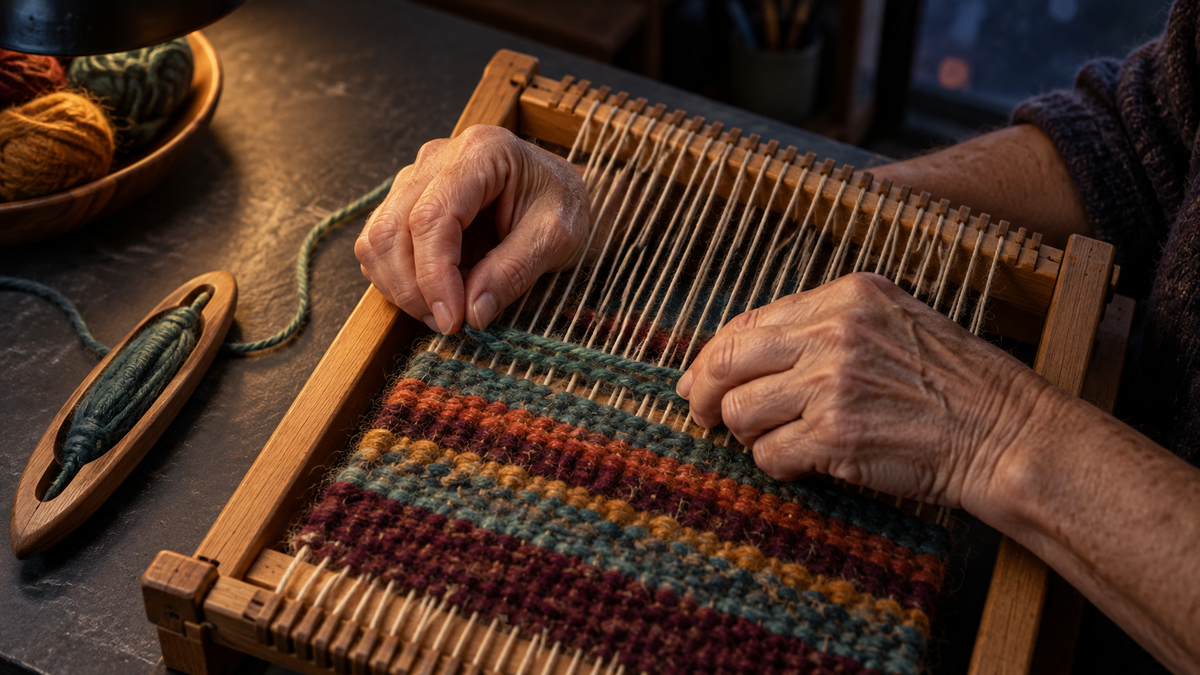
When crafting makes time seem to disappear, you may be experiencing flow: a period of deep involvement in which the task holds your attention and the next action feels clear. Research suggests art-making can coincide with this absorbed state, but it is not automatic or therapeutic. A suitable challenge, clear progress and fewer interruptions may make it easier to settle in.
What flow feels like during a craft
Flow is not simply concentration, and it does not require producing your best work. It is usually described as a state of close involvement in an activity: attention narrows, action and awareness feel connected, and the usual sense of time may change. You might notice it while repeating a stitch, placing colour, shaping clay or solving the next small part of a pattern.
The experience can be quiet rather than dramatic. You may still pause to check a line, unpick a section or change colour. The useful distinction is that these decisions belong to the task in front of you; they are not a battle to begin it.
Flow is also personal. One maker may enjoy a precise counted pattern, while another becomes absorbed by colour choices and improvisation. A familiar technique can feel pleasantly steady on one day and dull on another. There is no need to treat flow as a standard that proves whether a session was worthwhile.
What research can — and cannot — tell us
One experience-sampling study followed 41 adults involved in participatory art and collected 2,495 short reports about their recent experiences. Recent art-making was associated with shifts that included greater hedonic tone, vivid internal imagery and features of flow. Because the study observed people in daily life rather than randomly assigning a craft intervention, it shows an association, not proof that art-making caused those changes.
A broad scoping review of flow research found that flow has been studied across work, learning, sport, leisure and creative activities. Across that varied literature, clear goals, feedback, personal relevance and a workable balance between challenge and skill repeatedly appeared as related conditions. However, the studies used different activities, populations and measures. Their findings cannot promise that a particular craft will create flow for every person.
The practical takeaway is modest: a craft session may support absorbed attention when the task is meaningful, its next step is understandable and the difficulty is neither flat nor overwhelming. That is a useful design principle, not a treatment claim.
Choose a task with a visible next step
A vague intention such as “work on my project” asks you to decide too much before you begin. Give the session one concrete edge: weave three more rows, sort the next six colours, transfer one section of a pattern or finish the background area. The goal should be clear enough that you can recognise progress without constantly judging the whole project.
Visible feedback helps. In many crafts, the work itself provides it: a line becomes even, a colour block fills, a shape appears or a row reaches the marker. If feedback is slow, create a smaller checkpoint. Place a removable clip at the end of the section or keep the next few materials together. This is about making the task legible, not turning personal time into a productivity system.
Adjust the challenge instead of blaming yourself
Absorption is difficult when a task is so easy that attention wanders, or so demanding that every step feels uncertain. If you are restless, add one gentle choice: a new colour combination, a slightly more detailed section or a technique you have practised once before. If you are frustrated, reduce the field: return to a familiar stitch, enlarge the working area or complete one repeated section before tackling the difficult part.
Skill and challenge are not fixed qualities. Good lighting, a comfortable working position and readable instructions can change how difficult the same task feels. So can tiredness, interruptions or an unfamiliar material. Adjusting the setup is not lowering a standard; it is responding to the session you actually have.
Prepare the first minute
Flow cannot be scheduled on command, but avoidable friction can be reduced. Before you stop a session, leave the project ready for its next safe action. Store the current colours together, mark your place and write a short note if the next step is easy to forget. Keep sharp tools covered and put loose cords or materials where they will not catch or spill.
When you return, begin with the prepared action rather than reassessing the entire project. The article on organising a craft project you can pause and return to has a practical method for containing works in progress. If space is the main barrier, see how to create a craft corner in a small home.
Give attention a boundary, not a deadline
A short protected period can be enough to find your place, but a timer can also pull attention back to the clock. Choose the boundary that suits the day: one pattern section, one loaded shuttle, one tray of pieces or a natural stopping point before the next colour. If you need a time limit, make it practical rather than competitive.
Reduce only the interruptions you can reasonably control. Put the phone out of reach, gather water before beginning and let other household members know when you need a brief uninterrupted stretch. Real life will still intrude. A broken session is not a failed one, and flow does not have to occur for making to be enjoyable.
Notice what helped after the session
Instead of asking whether you achieved flow, ask what made attention easier. Was the task clear? Did the material feel satisfying? Was the challenge manageable? Did you prefer silence, conversation or background sound? These observations can guide the next session without turning a subjective experience into another obligation.
If you want to try a different material or level of structure, the Crafting collection is a starting point. Check each product page for its exact contents and requirements rather than assuming every kit includes the same materials or tools.
Absorption is welcome, not required
A good craft session may be deeply absorbing, companionable, experimental or simply pleasant. Flow describes one kind of experience; it is not the only reason to make. Clear steps, suitable difficulty and a prepared workspace can create better conditions for attention, but there is no need to force the feeling. The work in front of you is enough.
Research referenced
- Using the experience-sampling method to examine the psychological mechanisms by which participatory art improves wellbeing — an observational experience-sampling study of 41 adults and 2,495 reports.
- A Scoping Review of Flow Research — a broad review mapping flow research across many activities, populations and study designs.
Frequently asked questions
Does losing track of time always mean flow?
No. A changed sense of time is one commonly described feature, but flow is broader and includes absorbed involvement in the task. Tiredness, distraction and ordinary enjoyment can also affect time awareness.
Are repetitive crafts more likely to create flow?
They may suit some people because the next action and feedback are clear. Others need more choice or challenge to stay engaged. Research does not establish one craft as reliably flow-producing for everyone.
Can a beginner experience flow?
Possibly. Expertise is not a requirement, but the task needs to feel manageable enough to continue. Clear instructions, a small working area and an adjustable level of difficulty can help.
Is flow a treatment for stress or poor concentration?
No. Flow is a description of an absorbed experience, not a medical treatment. Craft can be part of personal time, but it should not replace professional support when that is needed.