
20 September 2026
How to Host a Relaxed Craft Night with Friends
By OpenClip
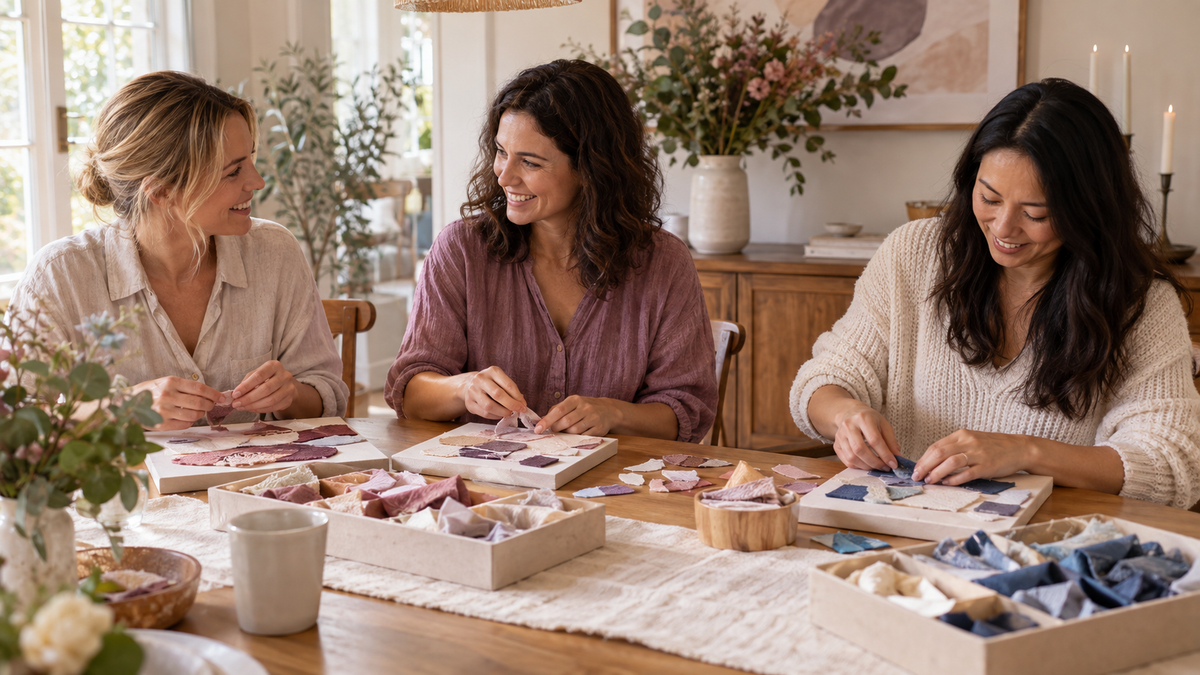
A relaxed craft night works best when the project is clear, the table is organised and nobody is expected to finish at the same pace. Ask each friend to choose a design, prepare separate material zones, keep food away from the work surface and build in time for conversation. The aim is a good shared evening, not identical results.
Invite people into a simple plan
You do not need a formal workshop agenda. Tell your friends what you will be making, how much table space is available and whether they should choose a project in advance. A small group is easier to seat comfortably and gives everyone room to arrange fabric and tools.
Keep the invitation clear: this is a casual making session, and unfinished projects can go home for later. That one sentence removes the pressure to work quickly or compare progress.
Let everyone choose their own design
A shared craft night is more interesting when each person makes something they genuinely like. Friends do not need matching designs. Different subjects and colour palettes create conversation and make it easier to recognise each person's materials.
For a year-round session, browse the current Kinusaiga Fabric Art Kit designs. For a festive gathering or handmade seasonal gift, the Christmas Kinusaiga Fabric Art Kit offers a separate set of Christmas designs. Check each live product page for current variants, contents and availability before planning the session.
Set up one workspace per person
Divide the table before anyone opens materials. Give each maker a board area, a small tray or bowl for fabric pieces and a safe place for tools. Keep shared items in the centre only if they are genuinely shared; otherwise, separate sets prevent pieces from wandering into the wrong project.
A useful table layout includes:
- Good overhead or natural light across every seat.
- Enough elbow room to turn the project without bumping a neighbour.
- A labelled or visually distinct tray for each person's materials.
- One offcut container per workspace.
- A separate side table for drinks and snacks.
- A closed storage place for tools when the session pauses.
Food and fabric do not need to compete for the same table. Keeping cups and plates to one side protects the projects and makes conversation easier.
Begin with a shared orientation, then separate
Start together by reviewing the product information and available guidance. Identify the materials and tools in each selected kit, then let everyone work independently. Do not assume that one person's previous craft experience makes them the instructor for the whole table.
If somebody wants help, look at the same verified guidance together. Avoid improvising a technique that could damage the materials or using a sharp tool in a way the product information does not support. Keep tool handling deliberate, and close or set tools down safely during conversation.
Make room for different paces
One friend may spend a long time comparing colours while another begins immediately. Someone may talk more than they make. That variety is part of a social craft evening, not a problem to solve.
Skip competitive milestones and avoid announcing who is “ahead”. Instead, ask questions about choices: Which fabric pattern are you drawn to? What section are you enjoying? Where might you display the finished piece? These prompts keep the conversation connected to making without judging speed.
Plan a natural pause
After an hour or when attention starts to drift, stop for a stretch, refill drinks and look at how the different designs are developing. A pause reduces clutter because everyone can return unused pieces to their tray and clear offcuts before continuing.
If the evening is ending, do not rush a final section. Take a progress photo, group each project with its materials and pack sharp tools securely. Each friend should leave with a clear next step and all of the pieces belonging to their design.
Turn the session into a gift occasion
A craft night can be the gift itself. Instead of buying identical finished objects, invite friends to choose a project and spend time making together. For birthdays, housewarmings or a festive catch-up, you can add a simple card or wrap the unopened kit before the session begins.
If a finished piece is intended for someone else, let the maker decide the design and pace. Handmade gifting is more thoughtful when it reflects a genuine choice rather than a deadline that makes the evening stressful.
Keep the mood adult, warm and unfussy
Kidult creativity does not require a children's-party theme. Use good light, comfortable chairs, a tidy table and music that still allows conversation. A few flowers, a cloth runner or a warm-coloured serving tray can make the room inviting without crowding the workspace.
The activity can be playful while the setting remains calm and grown-up. The pleasure comes from colour, texture, company and seeing individual choices take shape.
For friends who prefer solo making
Not everyone relaxes in a group. Offer the craft night as an option, not an obligation, and let friends take their project home whenever they want. Our guide to making time for a creative hobby without rushing shows how the same project can fit into quieter personal time.
Frequently asked questions
How many people should I invite to a craft night?
Invite only as many people as you can seat with a clear individual workspace. Table size and lighting matter more than a fixed number. A smaller group is usually easier for a first session.
Does everyone need the same Kinusaiga design?
No. Different designs can make the session more personal and help keep materials separate. Each person should confirm the current contents and guidance for the kit they choose.
Should we try to finish during one evening?
No. Set a comfortable finish time and pack each project separately. Progress photos and a note about the next step make it easy to continue later.
How should sharp tools be managed?
Use them only as supported by the product guidance, keep them within the owner's workspace and close or store them securely during breaks. This activity is for adults unless a product specifically provides different age and supervision guidance.
Can a craft night work as a gift?
Yes. You can give the project and the shared making time together. Let the recipient choose a design where possible, and avoid promising a particular completion time.
Choose a design for each maker, clear the table and make an evening of it. Explore year-round Kinusaiga designs or browse the Christmas collection.