
23 October 2026
What Does Research Say About Crafting and Life Satisfaction?
By OpenClip
A large survey linked arts and crafts participation with slightly higher life satisfaction, happiness and sense of purpose—but it could not prove cause and effect.
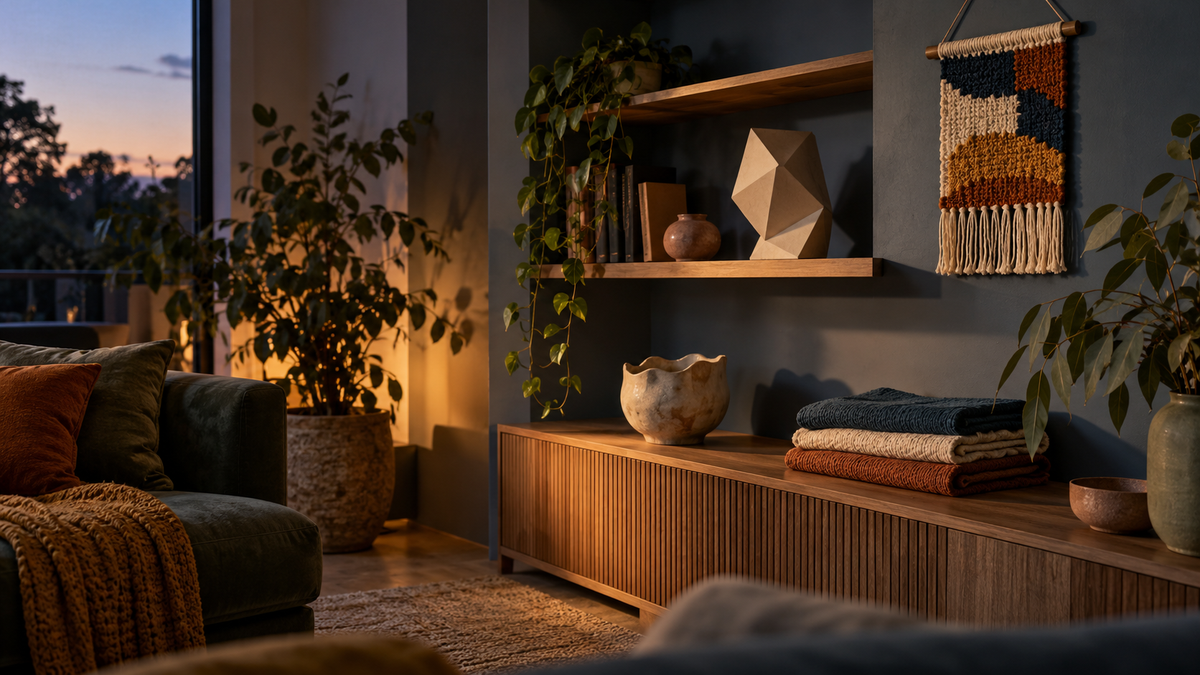
Research suggests that people who make art or craft tend to report slightly higher life satisfaction, happiness and a stronger sense that life is worthwhile. That is an association, not proof that crafting causes better wellbeing. The practical message is modest: making can be one meaningful part of everyday life, without needing to become a remedy, a performance or another obligation.
What the large survey actually found
A 2024 study analysed responses from 7,182 people aged 16 and over who took part in England’s Taking Part Survey in 2019–2020. The researchers asked whether participants had done any creating arts or crafts during the previous 12 months. Examples included painting, drawing, pottery, photography, filmmaking, knitting, sewing and crochet.
About 37 per cent of respondents said they had taken part in at least one of those activities. After accounting statistically for factors including age, gender, health, employment and area-level deprivation, arts and crafts participation was associated with slightly higher ratings of life satisfaction, happiness and the feeling that life was worthwhile.
The word slightly matters. Adding craft participation to the researchers’ models explained only a small extra portion of the differences between people: roughly 0.1 per cent for life satisfaction, 0.1 per cent for happiness and 0.4 per cent for feeling that life was worthwhile. The study did not find a significant added association with anxiety or loneliness.
Why association is not the same as cause
The survey captured a snapshot. It cannot tell us whether craft participation improved someone’s wellbeing, whether people who already felt better were more likely to make things, or whether another factor influenced both. Participants also reported their own activities and wellbeing, and broad categories grouped many different forms of making together.
The results came from people living in England, so they should not automatically be treated as a universal estimate. Nor did the study compare specific techniques, project lengths or skill levels. It does not show that knitting is better than collage, that frequent crafting is necessary, or that buying more supplies changes the outcome.
This careful reading leaves room for a useful conclusion without exaggeration: creative activity may sit alongside other ordinary experiences that help a life feel engaging and worthwhile. The study offers a reason to keep investigating that possibility, not a prescription.
What “worthwhile” can look like in a craft practice
A project does not need to be ambitious to carry meaning. It might preserve a colour combination you noticed on a walk, give shape to a memory, refresh a familiar technique or create something you want to display. Meaning can come from the attention given to the work, the decisions made along the way, or the connection between the finished piece and its intended place.
It can also come from continuity. Returning to the same basket, tray or shelf of materials makes it easier to pick up a thread of thought from one session to the next. If you are returning to a creative hobby after years away, that continuity can begin with a single small project rather than an attempt to recover every old skill at once.
A practical way to make room for it
The research does not identify an ideal routine, so there is no evidence-based number of minutes to chase. A workable practice is simply one that fits your circumstances and makes starting easier.
- Choose a project with a visible next step. “Select three fabric colours” is easier to begin than “finish the wall piece”.
- Keep the active materials together. A shallow box or tray reduces setup time and protects work between sessions.
- Stop at a useful point. Leave a short note about what comes next, especially if the project will rest for several days.
- Notice process as well as outcome. A colour decision, cleaner edge or repaired mistake can be satisfying even before the piece is complete.
- Let the project remain optional. If making starts to feel like a test of discipline, reduce the scope or set it aside without guilt.
For another research-informed perspective on short creative sessions, read What Research Says About Everyday Creativity and Next-Day Mood. The two studies ask different questions, but both are best read as evidence about patterns and possibilities rather than guarantees.
Choose materials for the experience you want
Materials affect the character of a session. Repetitive stitching may suit a familiar evening rhythm; paper, paint or fabric sampling may suit a shorter burst of colour exploration. If you want to see what is currently available, browse the OpenClip crafting collection and check each product page for its verified contents and requirements before choosing.
You do not need a large collection of tools to make a practice feel legitimate. Using what you already have, working from scraps or repeating a known technique can be just as intentional as beginning something new.
Frequently asked questions
Does crafting improve life satisfaction?
The study found an association between arts and crafts participation and slightly higher life satisfaction, but its cross-sectional design cannot show that crafting caused the difference.
Did the research find that crafting reduces anxiety or loneliness?
No significant added association was found for anxiety or loneliness in this analysis. Craft should not be presented as treatment or as a substitute for professional support.
Which craft is best for wellbeing?
This research did not compare individual crafts or identify a best activity. A sensible choice is one that is accessible, appealing and appropriate for your space, budget and physical comfort.
How often should I craft?
The study asked about participation during the previous 12 months and did not establish an ideal frequency. Choose a rhythm that feels sustainable rather than treating creative time as a quota.
Research referenced
- Keyes, H., Gradidge, S., Gibson, N., Harvey, A., Roelofs, L., Zawadzki, N. and Klas, A. (2024). Creating arts and crafting positively predicts subjective wellbeing. Frontiers in Public Health, 12, 1417997.
A modest finding, and a useful invitation
The clearest reading of this research is neither “crafting changes everything” nor “the effect is too small to matter”. It is that making appears alongside several positive judgements about life in a large survey, while the direction and mechanism remain uncertain. That is enough to value creative time for what it can be: a practical, self-directed way to pay attention, make choices and bring something considered into the world.