
18 October 2026
Can Everyday Creative Activity Lift Your Mood?
By OpenClip
Daily-diary research suggests everyday creative activity may be linked with positive mood and engagement, but the evidence is observational and modest.
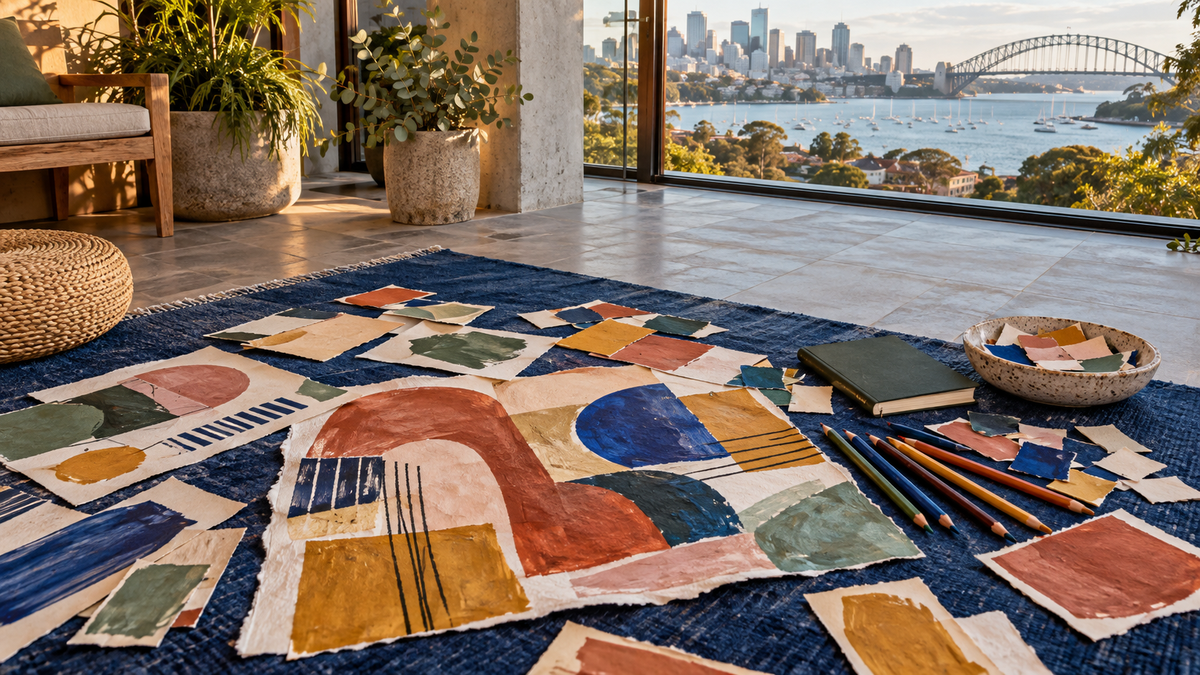
Everyday creative activity may be linked with a brighter, more engaged mood, but the research is modest and does not prove that craft causes wellbeing. Daily-diary studies suggest that doing more creative activity than usual can coincide with, or sometimes precede, higher positive affect. The useful takeaway is simple: make space for small, absorbing acts of making without asking them to fix how you feel.
What researchers mean by everyday creativity
In this research, creativity is broader than producing gallery-ready art. It can include trying a new colour combination, writing, cooking inventively, playing music, drawing, making a collage or solving a practical problem in an original way. A craft project can fit, but the studies did not test every craft separately.
This matters because the interesting part is not talent or a polished result. It is the ordinary act of making a choice, testing an idea and shaping something that did not exist in quite that form before.
What a 13-day diary study found
Psychologists Tamlin Conner, Colin DeYoung and Paul Silvia followed 658 young adults for 13 days. Each evening, participants reported their creative activity, positive and negative affect, and measures related to flourishing.
On days when people did more creative activity than was usual for them, they reported higher activated positive affect and flourishing the following day. The reverse pattern—positive affect predicting more creative activity the next day—was not supported in the same analysis.
That finding is intriguing, but it is not a prescription. Participants chose their own activities and reported their own experiences. The sample was young, and a daily-diary design cannot rule out every other explanation. It supports a possible day-to-day relationship; it does not show that a particular craft will improve everyone’s mood.
Mood and creativity may also move together
A second study followed 31 corporate research-and-development employees in Beijing and Shanghai for 15 days. Participants reported mood and creativity three times a day and reconstructed major events each evening.
Happiness, concentration, feeling active and feeling interested were positively associated with self-rated creativity. Tiredness and sleepiness tended to be associated with lower creativity. Because mood and creativity were measured together, this study cannot tell us which caused the other. Its small, specific working sample also limits how widely the results should be applied.
Taken together, the studies suggest a relationship between everyday creativity and more activated positive states such as interest and engagement. They do not say that a quiet project must feel cheerful, or that an unpleasant day has been wasted.
A practical way to use the evidence
The gentlest interpretation is to make creativity available, not compulsory. Instead of setting a goal to “improve your mood”, choose a small action that gives you something concrete to notice and decide.
- Make the first step visible. Put out the paper, thread, beads or colour samples you need, while keeping sharp tools safely stored.
- Choose one decision. Test two colours, arrange five shapes or complete one small section rather than planning a whole finished piece.
- Leave room for interest. Follow the part that holds your attention, even if it was not in your original plan.
- Stop at a natural pause. Photograph the layout or leave a note about the next step so returning feels easy.
- Let the result be neutral. A session can be worthwhile even when it produces a sample, a mistake or a clearer idea of what not to do.
Choose a project that suits the day you have
Energy and attention vary. On a lively day, you might explore unfamiliar colours or begin a new composition. On a quieter day, sorting materials, repeating a familiar stitch or preparing the next stage may be enough. There is no need to force novelty at every sitting.
If you are returning after time away, read our guide to returning to a creative hobby. If starting is the main obstacle, a small, ready-to-use craft corner can reduce the number of decisions between intention and action.
Notice without turning craft into another metric
You do not need a mood tracker or productivity target. A simple question after making—“Do I feel more interested, settled, energised or unchanged?”—can help you learn which activities fit different days. “Unchanged” is a perfectly acceptable answer.
Craft is not a treatment and should not replace professional support. If low mood is persistent, severe or affecting daily life, speak with a qualified health professional. Creative time can remain what it is: a personally meaningful part of life, without carrying the burden of solving everything.
A small creative invitation
Choose three colours from materials you already own and arrange them in two different ways. Keep the version that interests you most, or keep neither. The point is the act of looking, choosing and trying. When you want a larger project, browse the current OpenClip craft collection and check each listing for its verified contents and requirements.
Questions about creativity and mood
Does crafting improve mood?
Some daily-diary research links everyday creative activity with positive affect and flourishing, but it does not prove that crafting causes a mood improvement for everyone.
How long do I need to make something?
The studies do not establish a universal minimum. A practical approach is to choose a session short enough to begin comfortably and long enough to make one or two genuine choices.
Does the project need to be difficult?
No. Everyday creativity can involve small original decisions within familiar activities. Difficulty is not the same as creativity.
What if making does not feel relaxing?
That is normal. Creativity can feel absorbing, frustrating, energising or neutral. Change the scale, pause the project or choose a more familiar task rather than forcing a particular feeling.
Research referenced
- Conner TS, DeYoung CG, Silvia PJ. Everyday creative activity as a path to flourishing. The Journal of Positive Psychology. 2018;13(2):181–189.
- Han W, Feng X, Zhang M, Peng K, Zhang D. Mood States and Everyday Creativity: Employing an Experience Sampling Method and a Day Reconstruction Method. Frontiers in Psychology. 2019;10:1698.