
31 August 2026
How to Clean and Care for a Raw Carbon Pickleball Paddle
By OpenClip
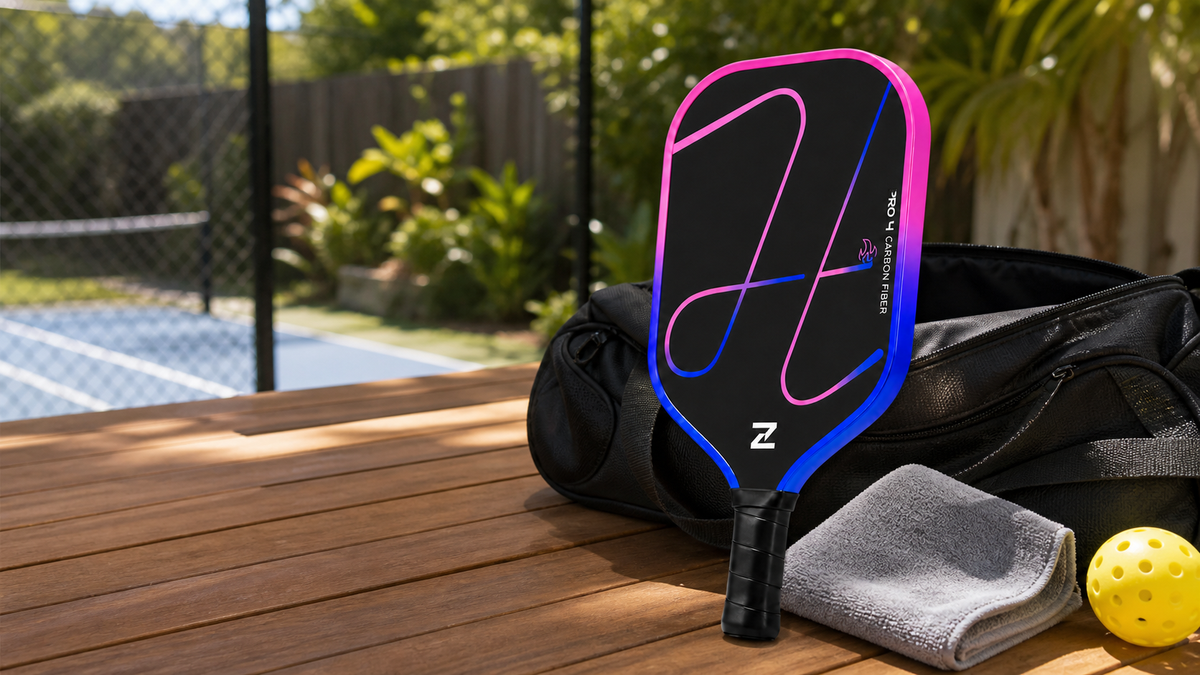
Care for a raw carbon pickleball paddle by wiping it with a soft dry cloth after play, keeping the grip clean and dry, inspecting the edge guard and storing it away from prolonged heat, moisture and direct sunlight. Gentle routine care protects the OpenClip T700 paddle from avoidable damage without using harsh chemicals or abrasive tools on its textured face.
A simple after-play routine
- Let the paddle return to a normal temperature. Move it out of direct sun before cleaning.
- Wipe away dry dust. Use a clean, soft, dry cloth across the face, edge and handle.
- Inspect the edge guard. Look for lifting, cracks or impact damage.
- Check the grip. Make sure it is dry, secure and comfortable.
- Store it indoors. Keep the paddle flat or supported in a dry place.
The current OpenClip T700 16mm paddle uses a textured raw T700 carbon fibre face, polypropylene honeycomb core and wrapped perforated grip. Care should preserve those materials rather than trying to make the surface look polished.
How to clean the raw carbon face
Start with the least aggressive method: a soft, dry microfibre cloth and light pressure. This removes ordinary court dust and loose ball residue without grinding debris into the textured finish.
Do not use sandpaper, kitchen scourers, stiff brushes or abrasive powders. They can alter the face texture and appearance. Avoid soaking the paddle or allowing liquid to run into the edge or core. OpenClip does not currently publish a chemical-cleaner list for this paddle, so do not assume household solvents, alcohol or strong detergents are suitable.
A visible ball mark is not automatically a performance problem. Clean gently, then assess the paddle by condition and normal play rather than repeatedly scrubbing one cosmetic mark.
Keep the grip dry and secure
The handle is your only direct connection to the paddle, so grip condition affects comfort and confidence. After a hot session, wipe the wrapped grip with a separate dry cloth and let it air indoors before putting the paddle into a closed sports bag.
Check for twisting, loose edges, flattening or a slippery feel. An overgrip can be a replaceable wear layer, but adding material also changes circumference and feel. Apply it evenly and avoid covering the end cap or creating a raised ridge that distracts your hand.
Do not leave a damp towel wrapped around the handle. Moisture held against the grip can create odour and shorten the useful life of the wrap.
Inspect the edge guard after court contact
Low balls and quick reaches can bring the paddle edge close to the court. After play, run your eyes—not a sharp tool—around the perimeter. Look for separation, deep gouges, cracks or a change in shape.
Minor cosmetic scuffs are different from structural damage. Stop using the paddle if the edge guard is loose enough to interfere with play, the face is separating, the handle feels unstable or the core sounds clearly abnormal. Contact OpenClip support rather than attempting a permanent repair that may hide the condition.
Protect the paddle from Australian heat
A parked vehicle can become much hotter than the surrounding air. Do not use the boot as long-term paddle storage, particularly on warm days. Prolonged heat may affect adhesives, grip materials and the paddle's structure even when the outside still looks normal.
Store the paddle indoors, out of direct sunlight and away from heaters or damp sheds. If it has been in a cold or hot environment, let it return gradually to a comfortable temperature before play.
Pack it so the face is not under pressure
Place the paddle where shoes, drink bottles and heavy equipment cannot press into the face or bend the handle. A dedicated padded sleeve can help prevent scratches, but a cover is not included in the current single-paddle offer.
Keep balls in a separate compartment when practical. The OpenClip Outdoor Pickleballs 6 Pack gives you six high-visibility yellow outdoor balls, but they should not be jammed against the paddle under a tightly packed zip.
Build a weekly inspection habit
For regular players, a two-minute weekly check is enough:
- Compare both faces under good light.
- Check the edge guard around the full perimeter.
- Hold the handle gently and notice any movement.
- Confirm the grip is dry and not twisting.
- Look for changes rather than expecting a factory-new appearance.
If two paddles are used together, inspect both rather than assuming they wear at the same rate. The OpenClip T700 2-Player Bundle contains two selected paddles, and each player's court habits can produce different wear.
What normal wear can look like
Ball contact, court dust and hand contact naturally change a paddle's appearance. Light face marks, small edge scuffs and grip wear do not automatically mean the paddle has failed. The important distinction is whether the product remains secure, stable and consistent in ordinary play.
No care routine can prevent every impact or make a playing surface last indefinitely. Good care is about avoiding unnecessary heat, moisture, abrasion and pressure while noticing meaningful changes early.
Frequently asked questions
Can I wash a raw carbon paddle under running water?
No. Do not soak the paddle or let water run into its edge or core. Start with a soft, dry cloth and use only care methods confirmed by the product instructions.
Should I use an abrasive carbon-fibre eraser?
OpenClip does not currently specify one for the T700 paddle. Avoid unverified abrasive tools because they may alter the textured surface. Use gentle dry cleaning unless OpenClip publishes another approved method.
Can I leave the paddle in my car?
Do not use a parked car as long-term storage. Australian vehicle interiors can become very hot, so store the paddle indoors away from prolonged heat and direct sunlight.
When should I replace the grip?
Replace or rewrap it when it becomes loose, twists, stays slippery after drying or no longer feels secure. Apply replacement material evenly so the handle remains comfortable.
Do cosmetic face marks mean the paddle is damaged?
Not necessarily. Light ball marks and court dust can be normal. Look for structural signs such as face separation, a loose edge guard, unstable handle or a clear change in response.
Small habits keep the paddle ready
Wipe, inspect, dry and store: that simple cycle is the safest way to care for the textured face, edge and grip. See the current OpenClip T700 16mm paddle details, and contact OpenClip if you notice a condition that may affect safe, stable play.